
Welcome toNuisance Wildlife
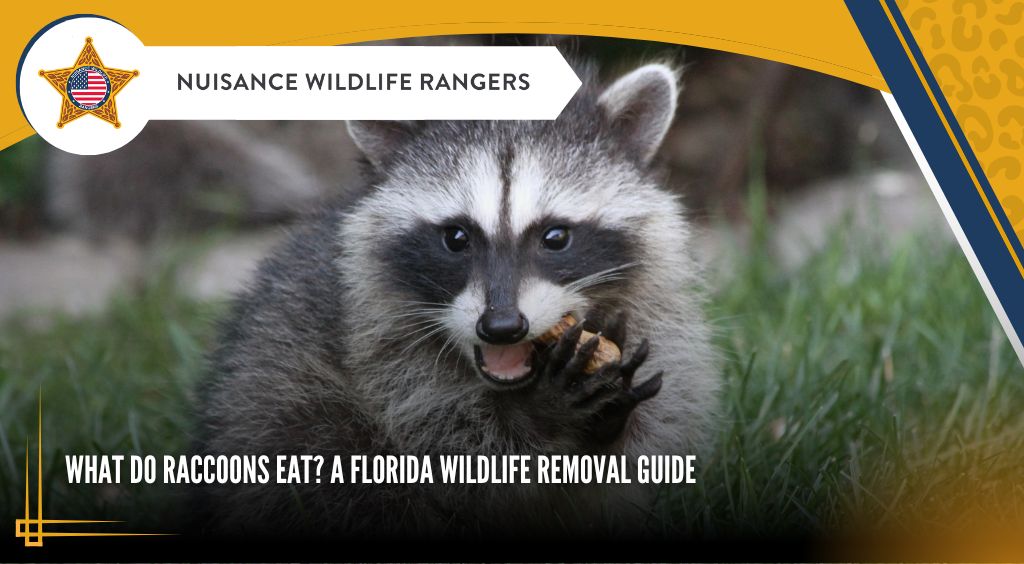
If you’ve ever spotted a bushy-tailed creature rifling through your garbage cans or scaling your backyard fence under the cover of darkness, chances are, you’ve encountered Florida’s most adaptable urban forager: the raccoon. Known scientifically as Procyon lotor, raccoons are omnivorous mammals well adapted to both the wild and residential areas. Their incredible dexterity, cleverness, and insatiable appetite make them both fascinating and problematic for Florida homeowners.
Raccoons are attracted to homes for two reasons: shelter and food. If you have food items like pet bowls, bird feeders, and a full trash can, you might find a raccoon or two in your backyard. Knowing exactly what they eat can help you prevent raccoon infestations from occurring.
This guide will answer the essential question—what do raccoons eat?—and why that matters if you’re dealing with a raccoon infestation or trying to avoid one.
Raccoons are classic opportunistic omnivores. That means their menu includes plants, fruit, insects, small animals, and anything else they can find or steal. Their front paws, often compared to human hands, allow them to gain access to a wide range of food sources—whether in the wild or your backyard.
In the wild, raccoons forage in hollow trees, rock crevices, and wetland areas for:
However, in urban areas, raccoons adapt their diet with gusto:
This makes them a magnet for conflict with humans—and an increasing cause for concern in Florida’s residential areas.
Raccoons don’t roam for fun—they roam for food and shelter. Here’s what can attract raccoons to your home:
And once they’re in, they may start raising young, leading to a more entrenched raccoon infestation.
Florida’s warm climate allows raccoons to forage year-round. However, seasonal behaviors do influence diet:
This seasonal rhythm means your property might become more appealing at specific times of year, especially when young raccoons are learning to find food near human structures.
It’s not just overturned trash that homeowners should worry about. Raccoons carry real health and safety risks.
Florida has seen consistent reports of rabid raccoons in urban and suburban areas. According to the Florida Department of Health, raccoons are among the most common carriers of rabies in the state.[1] A raccoon may feel threatened and become aggressive, especially if cornered or sick.
Baylisascaris procyonis, or raccoon roundworm, is found in raccoon droppings and can pose serious risks to humans and pets. Ingesting contaminated soil, water, or surfaces can lead to serious neurological damage in rare cases.
From tearing through attics to destroying insulation and air ducts, raccoons can cause thousands of dollars in damage. Their constant search for solid food leaves trails of destruction.
Raccoons coexist—and often compete—with other animals, including:
Interestingly, Native Americans historically observed the raccoon’s resourcefulness and adaptability in their legends, often portraying it as a trickster or survivor.
Look for these signs around your property:
Their iconic black mask, bushy tail, and nighttime activity make them relatively easy to spot—especially on motion-activated cameras.
Once you know what raccoons eat and what draws them in, you can take steps to keep them away:
Using these tips will help you prevent raccoons from coming onto your property. However, if you are already dealing with a raccoon infestation, you might need a professional to help you remove them.
If you suspect a raccoon infestation, don’t handle it yourself. Florida wildlife laws often require humane removal, and dealing with wild animals can be risky.
A professional wildlife removal service can:
This is especially crucial if you spot young raccoons, which are more vulnerable and more likely to remain close to the nest until old enough to forage.
Raccoons eat almost anything, but that doesn’t mean you should offer up your home and yard. By learning what raccoons eat and what attracts them, you’re one step closer to preventing costly damage and health risks.
Whether you’re dealing with a raccoon in the attic, tipped trash cans, or missing eggs from your chicken coop, understanding the raccoon’s diet is key to solving the problem.
To protect your home and pets, you should contact a professional raccoon removal service like Nuisance Wildlife Rangers. We will trap and relocate raccoons without harming them in the process. Contact us today for more information on how our services work.
No, raccoons do not hibernate in Florida due to the state’s mild winters. However, they may reduce their activity during colder or stormier periods, staying in dens for a few days at a time. This is known as torpor, not true hibernation.
Generally, no. Raccoons may act aggressively if they feel threatened, especially by dogs or cats. They can also transmit diseases and parasites. It’s best to discourage raccoons from entering spaces your pets use.
Raccoons are considered highly intelligent, with problem-solving skills on par with primates. Studies have shown they can remember solutions to tasks for over three years and manipulate complex mechanisms, such as door latches or twist-off lids.
Yes, raccoons are classified as a fur-bearing species under Florida wildlife regulations. It is illegal to relocate or euthanize them without proper permits or licenses. Only licensed wildlife control professionals should handle removal.
Strong scents like ammonia, vinegar, or predator urine can temporarily deter raccoons, but these are not long-term solutions. They often become desensitized or find alternate paths. Sealing food sources and entry points is more effective.
Raccoons are mostly solitary, except during mating season or when females are raising young. You might spot several raccoons together in urban areas, but they typically forage and sleep independently unless bonded by family ties.
References:
 Call Now
