
Welcome toNuisance Wildlife
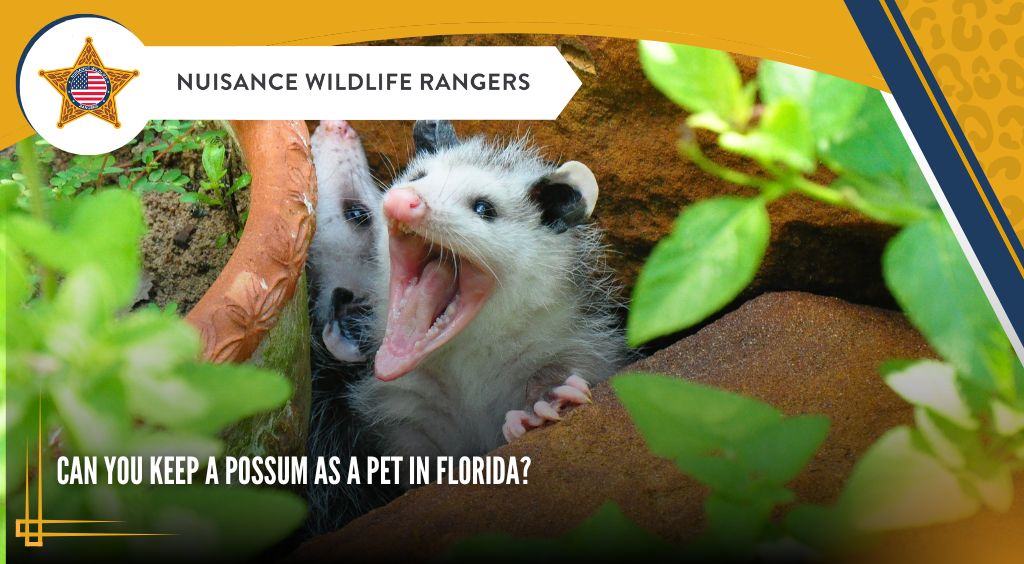
Considering keeping a possum as a pet in Florida? You’re not alone. People who find possums on their property may wonder about keeping it as a family pet. These unique, friendly-looking creatures may seem like an animal that might make the perfect pet. But is this true?
Possums are intriguing wild animals whose unique behaviors and adaptations fascinate many people. But before welcoming one into your home, it’s critical to understand the legal, ethical, and practical challenges involved.
This article will explain whether you can keep a possum as a pet in Florida, what that entails, and safer alternatives if you encounter wildlife on your property. If you find a possum or other wildlife on your property, it is critical to your safety to let professionals handle its removal. Reach out to the experts at Nuisance Wildlife Removal to learn about our services or to schedule a removal today.
The animal most people call a “possum” in Florida is actually the Virginia opossum (Didelphis virginiana)—a marsupial native to North America. These creatures are nocturnal, live mainly at night, and are solitary by nature. They have a prehensile tail, gray fur, a distinctive pink nose, and sharp teeth suited for their omnivorous diet. In the wild, they eat insects, fruit, small animals, eggs, and even carrion.
Unlike short‑tailed opossums sometimes kept in the exotic pet trade, the Virginia opossum is wild‑born and adapted for life outside human care. Their lifespan in the wild is short—about 1 to 2 years—and even in captivity, most live only a few years longer.
Because of these traits, opossums in nature are fundamentally different from domesticated animals like cats or dogs. While some people find them cute, they remain wild in behavior, instincts, and needs. Generally, pet possums are not a good idea. Instead, they must be removed and relocated for your safety and theirs.
In Florida, the state’s wildlife laws are clear: native wildlife cannot be kept as pets without appropriate permits. The Florida Fish and Wildlife Conservation Commission (FWC) regulates possession of wildlife under various classes.
In short, a permit is required to keep wildlife as a personal pet in Florida, including native mammals such as opossums. Opossums fall within categories of wildlife that require a Class III Personal Pet No‑Cost Permit if they are to be kept legally at a residence.
Taking native wildlife from the wild for pet ownership—such as capturing an orphaned baby opossum—is unlawful without the correct permit and often requires a wildlife rehabilitator to handle such situations. This permit must be renewed periodically, and even with the permit, you cannot take the animal into public areas.
The bottom line is that you can’t legally keep a wild opossum found in nature as a pet in Florida unless you go through the proper channels with the FWC, and simply picking one up from the wild without permission is not legal.
Wildlife permits aren’t bureaucratic red tape—they exist to protect both people and animals. Wild opossums may carry parasites and diseases, and their natural behavior in captivity can be unpredictable. Federal and state laws make handling wildlife by untrained individuals illegal because animals like opossums are not domesticated and require specialized care.
Handling wild animals can lead to serious consequences for the individual and the animal. It is vital to have professionals handle any wild animals in or around your home. Nuisance Wildlife Rangers offers quick, safe removal of a wide range of wildlife. Contact our team to learn more about our practices or to book our services.
Even when legal, keeping an opossum as a pet presents significant challenges. Here is an overview of some of the problems with keeping a wild possum as a pet.
Opossums have an omnivorous diet, meaning they eat insects, small animals, fruit, eggs, and other food sources. Replicating this natural diet in captivity can be difficult. While some captive owners feed commercial dry food alongside live insects and fresh fruit, getting the balance right is complex and crucial to the animals’ health.
Wild opossums are not domesticated over generations. They can be shy, nocturnal, and stressed by human presence. They may hiss, bare their sharp teeth, or try to escape when frightened.
Although some smaller species, such as short‑tailed opossums, are sometimes kept as exotic pets, they require very specific care and individual caging due to their solitary behavior.
Many people assume wildlife animals are “low maintenance” because they forage for themselves, but in captivity, they can be high-maintenance. Their requirements for secure housing, appropriate diet, environmental enrichment, and veterinary care are substantial.
If you find a baby opossum at a very young age without its mother, your first instinct might be to raise it yourself. However, wildlife experts strongly discourage this. Instead, contact a licensed wildlife rehabilitator who has the training and permits to care for and eventually release native wildlife. Never attempt to keep wild wildlife as pets because it can harm the animal and may violate state regulations.
Professional wildlife rehabilitators understand the behavior, diet, and developmental needs of young wildlife and can give orphans the best chance at survival.
For most people interested in animals, there are safe alternatives. Consider adopting domesticated pets such as cats or dogs, which are suited to life with humans and don’t require wildlife permits. If you are fascinated by opossums, support conservation or educational programs to help protect wildlife in their natural habitat. When opossums appear on your property, consult a wildlife removal professional instead of attempting to capture them yourself.
Professional wildlife removal services can humanely relocate wild opossums that pose a nuisance or safety concern, preventing stress to both the animal and your household.
Wild opossums are fascinating creatures that play an important role in Florida’s ecosystems by controlling pests and consuming carrion. But their wild nature, legal protections, and specific care needs make them unsuitable as typical pets for most residents. While the idea of an opossum as a pet may seem appealing, it’s not a good fit for most humans, households, or wildlife.
If you encounter an opossum on your property or find a baby in need of help, reach out to the professionals at Nuisance Wildlife Rangers. Learn about our services or schedule a removal quickly by contacting us today.
Opossums are nocturnal scavengers often attracted to pet food, compost, or accessible trash. To discourage repeat visits, secure garbage bins, bring pet food indoors overnight, and eliminate easy access points, such as low crawl spaces. If the problem continues, consult a licensed wildlife removal company to assess and address entry points humanely.
In Florida, relocating wildlife without a permit is often illegal, even if your intention is humane. Improper relocation can also disorient the animal and spread disease. It’s best to leave removal and relocation to certified professionals who follow state wildlife regulations and use humane trapping methods.
While opossums rarely transmit rabies due to their lower body temperature, they can carry fleas, ticks, and other parasites, as well as diseases like leptospirosis and salmonella. Avoid direct contact and ensure pets are up to date on vaccinations and parasite control. Always wash your hands after handling anything in areas where wildlife has been.
Yes — surprisingly, opossums offer natural pest control. They eat ticks, cockroaches, snails, rats, and even venomous snakes. Some estimates suggest that a single opossum can consume up to 5,000 ticks per season, helping reduce the risk of tick-borne disease. As long as they’re not nesting in your attic or damaging property, it may be best to let them be.
A possum found wandering alone during the day, appearing lethargic or with visible injuries, may need help. Baby opossums smaller than 7 inches (excluding tail) found alone are likely orphaned. Do not attempt to raise them. Instead, contact a licensed wildlife rehabilitator, who can assess the animal’s condition and determine the best next steps.
In the U.S., “opossum” refers to the Virginia opossum, North America’s only marsupial. “Possum” is a colloquial shorthand. However, in Australia and nearby regions, “possum” refers to a completely different group of marsupials. So while the terms are often used interchangeably in casual conversation, they technically refer to different species depending on geography.
 Call Now
