
Welcome toNuisance Wildlife
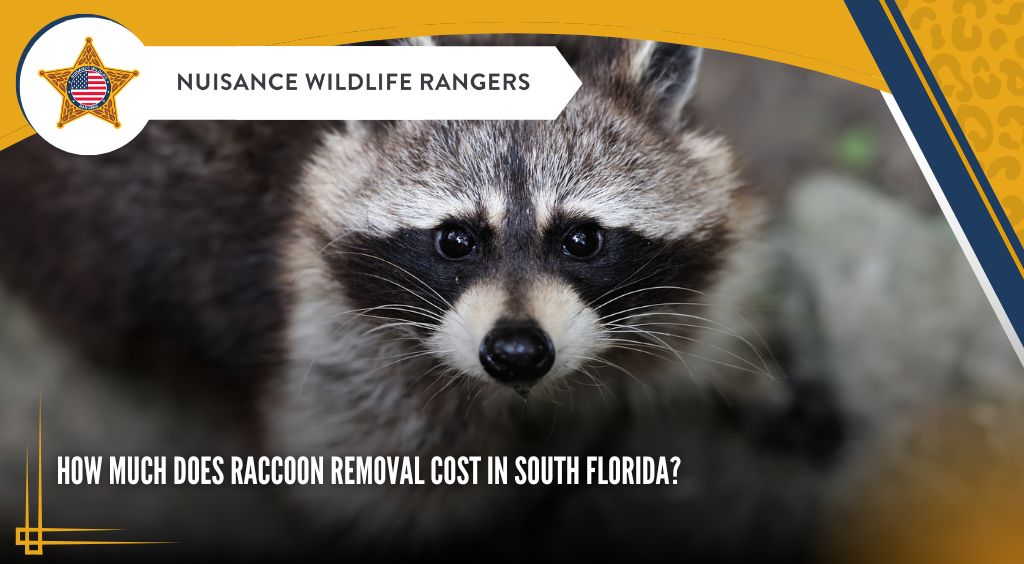
Raccoons are among the most common wild animals that invade homes across South Florida. With warm weather, abundant food sources, and easy shelter options in attics and crawl spaces, raccoons frequently gain entry into residential properties. If you notice signs of raccoon activity, understanding raccoon removal costs and the factors that influence them can help you plan and prevent further damage.
This guide explains the cost of raccoon removal in South Florida, the factors that affect pricing, the risks of a raccoon infestation, and how professional raccoon removal services work. If you need nuisance wildlife removal, contact the professionals at Nuisance Wildlife Rangers now for help.
The average cost of raccoon removal in South Florida typically ranges from $250 to $1,500, depending on the situation. A single raccoon removal may cost less, while multiple raccoons, structural damage, and cleanup can significantly increase costs.
Typical price ranges include:
These figures reflect local wildlife control market averages in South Florida and national estimates for pest removal.
Typically, wildlife removal services range from $200 to $600 for small infestations, but can exceed $1,500 when damage repair is needed. The National Wildlife Control Operators Association (NWCOA) reports that raccoon removal often requires multiple visits and exclusion work, which increases costs.
Several factors influence raccoon removal costs. Understanding these helps homeowners estimate the cost of raccoon removal more accurately.
The infestation size is one of the biggest factors in raccoon removal costs. A single raccoon is usually cheaper to remove than multiple raccoons or all the raccoons in a nest.
Young raccoons in raccoon nests can complicate removal, as wildlife removal pros must use humane methods and ensure the babies are safely relocated. More raccoons typically require multiple traps, additional labor, and ongoing monitoring.
Property size and structure also affect costs. Larger homes or buildings may have more entry points and require more extensive inspection.
Hard-to-reach areas such as attic insulation spaces, roof voids, or crawl space zones increase labor time and safety risks.
The removal method directly impacts pricing. Common methods include:
States require humane methods for wildlife removal, so most professionals rely on humane trapping rather than lethal methods.
Raccoon damage can significantly increase the cost of raccoon removal. Damage may include:
Significant damage often leads to repair costs exceeding the actual removal service fee.
Raccoons can cause significant damage in a short period, leading to costly repairs. Early detection can help remove raccoons before further damage occurs.
Common signs include:
If you notice signs, scheduling a raccoon inspection is essential to confirm infestation size and prevent future infestations.
A raccoon infestation presents multiple health and safety risks for homeowners. The Centers for Disease Control and Prevention (CDC) reports that raccoons carry diseases such as rabies, leptospirosis, and raccoon roundworm, which can spread through contact with raccoon feces or contaminated surfaces.
Health risks include:
Raccoon cleanup is critical after removal to reduce potential risks and restore safe living conditions.
Professional raccoon removal services involve a structured process to safely remove the animal and prevent future invasions. Here is an overview of what may be included in wildlife removal services.
A raccoon removal pro begins with a detailed raccoon inspection to locate entry points, identify raccoon nests, and assess property damage.
Humane trapping with live traps is the most common removal method. Wildlife control experts place traps strategically and conduct multiple visits to monitor progress.
If manual removal is needed, professionals may use a snare catch pole to remove raccoons safely.
Once raccoons leave, technicians seal entry points and seal entrances to prevent more raccoons from returning. Common prevention measures include:
Exclusion work is essential to prevent future invasions.
Cleanup services address contamination and damage repair needs. This may involve removing damaged insulation, sanitizing surfaces, and repairing structural damage.
Many homeowners ask whether homeowners’ insurance covers the cost of raccoon removal. Homeowners’ insurance typically covers damage caused by sudden incidents, but may not cover the removal of a wildlife infestation itself. Coverage varies by policy and insurer.
In general, removal costs may not be covered. Structural damage may be covered if sudden, but damage from gradual infestations is often excluded.
If raccoon damage occurs, contact your insurance agent immediately to verify whether homeowners’ insurance covers raccoon repair costs. Some policies may cover the replacement of attic insulation and the repair of structural damage. The Insurance Information Institute notes that wildlife damage is often covered only when caused by a covered peril and not due to neglect or ongoing infestations.
Homeowners sometimes attempt DIY removal to save money, but this approach carries risks. Here is an overview of the risks of DIY wildlife removal.
DIY efforts may include placing traps, sealing holes, or trying deterrents. However, removing a raccoon infestation without professional training can result in:
Florida wildlife regulations also prohibit the handling of certain wild animals without a permit.
While many people may consider removing raccoons and other wildlife themselves, this can be highly dangerous for individuals and animals. It can lead to bigger problems, including infestation and injury. In some cases, it may also be illegal.
Professional raccoon removal offers:
Hiring removal services often saves money long term by preventing recurring infestations.
Prevention is the most cost-effective wildlife control strategy. Taking steps to deter nuisance wildlife can reduce the risk of property damage, injuries and illness, and other problems.
Steps to deter raccoons include:
Preventive maintenance helps prevent raccoon infestations and reduces long-term raccoon removal costs.
Raccoon and other wildlife removal costs have been rising in recent years. Several factors contribute to increasing costs for wildlife removal services in South Florida.
Key reasons include:
The NWCOA reports that demand for humane wildlife control has risen nationwide, driving up raccoon removal prices. However, even with rising prices, hiring a professional can significantly reduce repair costs and prevent larger, more costly issues down the road.
While wildlife removal can be expensive, homeowners can take steps to reduce costs.
Helpful strategies include:
Early action prevents significant damage and reduces overall removal and repair costs.
Raccoons carry diseases, create property damage, and pose safety risks, making professional raccoon removal the safest and most effective solution. A licensed raccoon removal service can remove raccoons humanely, repair damage, and seal entry points to prevent future infestations.
If you notice signs of raccoon activity, prompt inspection and removal help protect your property and avoid escalating repair costs. Contact the wildlife removal experts at Nuisance Wildlife Rangers to learn more about our services or schedule a removal appointment now.
Raccoon removal timelines vary depending on infestation size and accessibility. A single raccoon may be removed within a few days, while multiple raccoons or situations involving young raccoons can take 1–3 weeks. Removal services often include multiple visits and ongoing monitoring to ensure raccoons leave and do not return.
Yes. Raccoons are considered native wildlife in Florida and must be handled humanely. State wildlife regulations require licensed wildlife control professionals to follow humane trapping standards and relocation rules. This is why professional raccoon removal is recommended over DIY approaches.
Yes, raccoons may return if entry points and food sources remain accessible. Wildlife control experts emphasize exclusion work, such as sealing openings, installing animal-proof vents, and securing trash cans. Without prevention measures, more raccoons may attempt to gain entry, leading to future infestations.
Raccoon activity occurs year-round due to South Florida’s warm climate, but infestations increase during breeding season, typically from late winter through spring. During this time, female raccoons search for sheltered spaces, such as attics and crawl spaces, to raise young, increasing the likelihood of raccoon nests in homes.
Raccoons rarely leave voluntarily once they establish a shelter and access to food. Waiting can result in further damage, contamination, and safety risks. Professional removal services use targeted strategies to encourage raccoons to relocate safely while preventing their return.
Professional raccoon removal services are designed to minimize risk to pets and children. Licensed technicians use strategically placed live traps, protective equipment, and controlled removal methods. However, homeowners should keep pets and children away from active trap areas and contaminated spaces until cleanup is complete.
 Call Now
