
Welcome toNuisance Wildlife
When a wild animal enters your home or property, time matters. Whether it’s scratching in the attic, digging in the yard, or rummaging through trash cans, nuisance wildlife can quickly escalate from a minor inconvenience into a serious problem. In Palm Beach County and across South Florida, wildlife intrusions are common due to warm weather, open spaces, and abundant food sources.
This guide explains how to get immediate animal removal in Palm Beach County, what to expect from animal removal services, and how to prevent future infestations.
A wildlife problem rarely resolves on its own. Unwanted animals often return, multiply, and cause increasing damage over time. Acting quickly helps prevent:
According to the Centers for Disease Control and Prevention, rodents alone are known to spread over 35 diseases worldwide, either directly or indirectly through ticks, mites, and fleas.[1] This makes prompt wildlife removal essential for both safety and hygiene.
Palm Beach County is home to a wide range of nuisance wildlife. Some of the most common unwanted critters include:
Raccoons frequently invade attics and crawl spaces, especially when searching for nesting materials. They can cause serious damage and scatter animal waste throughout the home. Raccoon removal often requires humane trapping and sealing entry points to ensure a raccoon-free property.
As an invasive species in South Florida, iguanas cause constant digging that weakens foundations, seawalls, and landscaping. Professional iguana removal is often necessary to control their population.
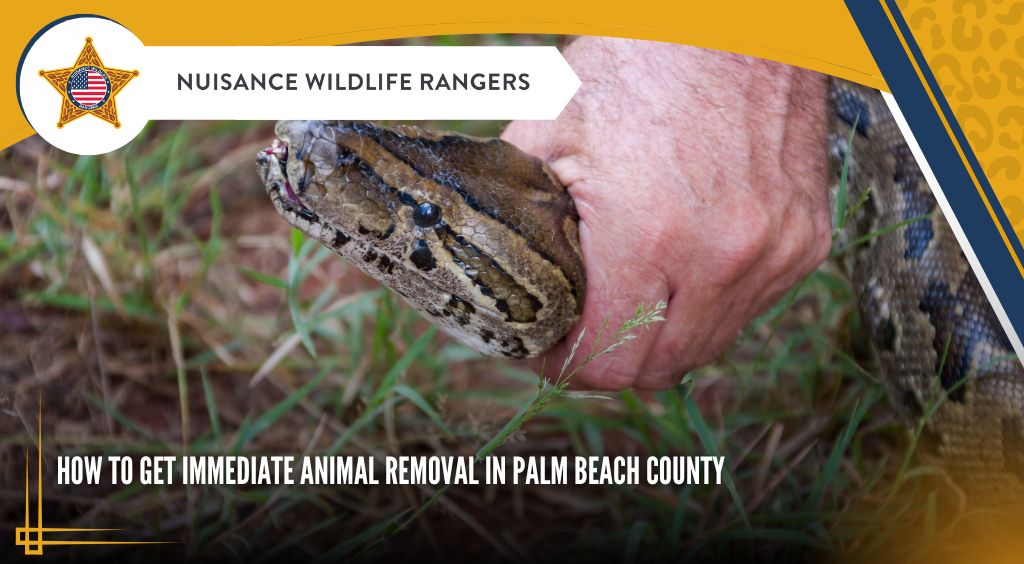
Snake removal is critical, especially when dealing with venomous species like coral snakes. Wildlife removal professionals use proper safety gear and specialized techniques to safely remove animals without risk.
Rat removal and squirrel removal are among the most common services. These animals enter small spaces, chew through insulation and wires, and reproduce quickly, leading to severe infestations.
Possum removal and bird control services are often needed when animals nest in attics or vents. Bird droppings and animal waste can create serious health risks.
Recognizing early signs of wildlife intrusions can help you act quickly. Watch for:
If you notice any of these, it’s time to contact an animal removal specialist.
Professional wildlife removal services follow a structured process designed to remove animals safely and prevent future issues.
Wildlife experts begin by identifying the species involved and locating all entry points. They assess:
This step ensures the correct removal method is used.
Most reputable animal removal services focus on humane removal techniques. This includes:
The goal is to humanely trap and remove animals without unnecessary harm.
Removing animals is only part of the solution. Wildlife exclusion prevents future intrusions by:
Without proper exclusion, wildlife will return.
After removal, professionals address contamination and repairs:
This step reduces health risks and restores your property.
Animal removal specialists also provide prevention tips to avoid future infestations:
Long-term prevention is key to avoiding recurring wildlife issues.
Some homeowners attempt to remove animals themselves, but this often leads to bigger problems. Risks include:
In Florida, local laws regulate how certain animals can be handled. Wildlife control services ensure compliance with these regulations while prioritizing humane removal.
Not all animal removal services are the same. When selecting a provider in West Palm Beach or elsewhere in Palm Beach County, look for:
Costs for animal removal vary based on the type of animal, the severity of the infestation, and your zip code. More complex cases involving multiple animals or significant damage will typically cost more.
Animal removal services vary based on several factors:
According to the National Pest Management Association, rodent infestations alone affect nearly 21 million homes in the U.S. each year, often requiring professional pest control or wildlife removal services. Early intervention can significantly reduce costs.
Preventing wildlife intrusions is just as important as removing animals. Here are practical steps:
These steps help reduce the likelihood of future intrusions and costly damage.
Wildlife control is not just about convenience—it’s about safety. Many wild animals carry diseases that can spread through contact, bites, or contaminated surfaces.
For example, raccoons can carry rabies, while rodents spread diseases through droppings and urine. According to the Florida Department of Health, wildlife-related health risks are a recurring concern in South Florida due to the region’s climate and biodiversity.
Professional wildlife removal services are trained to handle these risks safely and effectively.
You should contact an animal removal pro immediately if:
Quick action prevents small problems from becoming major infestations.
Immediate animal removal in Palm Beach County is essential for protecting your home, health, and peace of mind. With a wide variety of nuisance wildlife in South Florida, homeowners must stay vigilant and act quickly when problems arise.
Professional wildlife removal services provide the expertise needed to safely remove animals, repair damage, and prevent future issues. From raccoon removal to iguana control, working with wildlife experts ensures the problem is handled thoroughly and humanely.
If you’re dealing with unwanted visitors, don’t wait. Address the issue early, secure your home, and take steps toward long-term prevention.
Contact Nuisance Wildlife Rangers today to learn more about our immediate animal removal services.
Most animal removal specialists in Palm Beach County offer same-day or next-day service, especially for urgent situations involving dangerous or aggressive animals. Response time can vary based on your zip code, time of day, and the severity of the wildlife problem. Emergency wildlife removal services are often available for immediate threats.
Yes, Florida has specific local laws and regulations regarding wildlife control. Certain species are protected, and removal methods must follow state guidelines. Licensed wildlife removal professionals understand these regulations and ensure that all trapping and removal methods are compliant, avoiding legal issues for homeowners.
After humane trapping, animals are typically relocated or handled according to Florida wildlife regulations. For invasive species like iguanas, different rules may apply. Wildlife removal professionals follow approved practices to ensure ethical and lawful handling of all animals.
Yes, wildlife can return if the underlying causes are not addressed. Even after animals are removed, new wildlife may be attracted to the same food sources or access points. This is why wildlife exclusion and long-term prevention strategies are critical to stopping future intrusions.
Coverage varies based on your insurance policy. While some policies may cover damage caused by wildlife, many do not cover the cost of removal services themselves. It’s important to check with your provider to understand what is included, especially if there is structural damage or contamination involved.
Multiple animals are common, especially with species that nest or reproduce quickly. Signs include increased noise levels, activity at different times of day, and widespread damage or droppings. A professional inspection is the best way to determine the full extent of a wildlife issue and ensure all animals are removed.
References:
 Call Now
