
Welcome toNuisance Wildlife
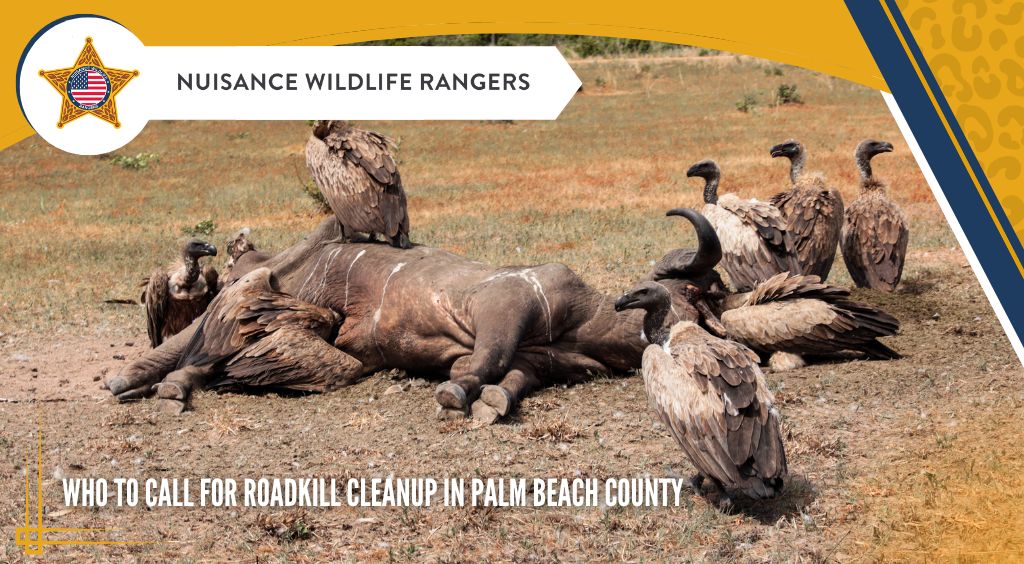
Finding a dead animal on the road, in your yard, or near your house is unpleasant, but it is also a public health and safety issue. Whether you live in West Palm Beach or another area of Palm Beach County, knowing who to contact for roadkill cleanup in Palm Beach County can save time, reduce health risks, and make sure the situation is handled correctly.
Roadkill cleanup is not always as simple as moving an animal out of the way. The location, type of animal, whether the animal is on public right of way or private property, and the condition of the remains all affect who is responsible for removal.
This guide explains who to call, when to report an issue, and how dead animal removal works across Palm Beach County.
Dead animals create more than bad smells. A dead animal left near a road, backyard, roof, wall, attic, or yard can attract insects, rodents, and scavengers. It may also create sanitation concerns for nearby people, businesses, and residents.
Vehicle collisions with wildlife remain a major problem across Florida and the United States. Millions of animals are killed on roads every year, and many cases require cleanup or removal services.
In Florida, wildlife and transportation agencies continue to work on reducing road-related animal deaths because of the impact on both wildlife and public safety.
The answer depends on where the dead animal is located.
If dead animals are located on a public road, shoulder, highway, or public right of way, local government departments or transportation agencies are often responsible.
You may need to contact:
For example, if the dead animal pickup request involves a major state road in FL, transportation agencies may handle removal.
When reporting, provide:
Providing accurate information helps departments transport crews faster.
If the dead animal is on private property, responsibility usually shifts to the property owner.
Examples include:
A professional dead animal removal service may be required if the animal is inaccessible.
Many wildlife removal companies assist with:
A dead animal inside your home creates different challenges.
Common places where homeowners find carcasses include:
Rodents frequently die inside hidden areas, especially after entering through damaged entry points.
Signs include:
Professional services are often equipped with tools to locate hidden remains without unnecessary damage to the house.
After removal, technicians may deodorize affected spaces and inspect how the animal gained access.
Palm Beach County residents commonly report:
Different animal species require different handling procedures.
For example:
Knowing the type of animal helps animal services determine responsibility.
Finding a deceased pet is emotionally difficult.
If the animal appears to be a lost dog or cat, avoid immediate disposal if possible.
Instead:
If your own pet passes away, options may include:
Pet adoption organizations and shelters may also direct residents toward local resources for deceased pet care.
Some situations require professional help.
Consider hiring a removal company if:
Professional companies often provide:
Many businesses also guarantee follow-up work if odors continue.
Whether contacting animal control, environmental services, or a private business, provide:
Good information speeds up the response time.
Never touch a dead animal with your bare hands.
Follow these safety steps:
Dead animals may carry parasites, bacteria, or disease.
Prevention reduces future removal costs.
Simple ways to prevent wildlife access include:
These steps help rid your property of conditions that attract wildlife.
Response time varies depending on:
Animals on busy roads may receive faster service because of public safety concerns.
Private removal companies may provide same-day service depending on hours and availability.
Not every dead animal situation requires the same approach. In many cases, the location of the animal determines whether residents should contact animal services, environmental services, or a private removal company.
When a dead animal is located near a busy road or transportation route, safety becomes the priority. Drivers should avoid stopping in unsafe areas and instead report the location to the appropriate city or county department. Animals left near traffic lanes create hazards for both vehicles and wildlife.
Dead animals found inside walls, attic spaces, roof cavities, or crawl spaces often require specialized removal methods. Hidden carcasses can create strong odors, attract rodents and insects, and become difficult to access without proper equipment.
Residents commonly find dead animals in a backyard, garden, or side yard after storms, predator activity, or natural causes. Small wildlife may be easy to spot, but larger animals or decomposing remains may require professional assistance for safe handling and disposal.
Business owners also face dead animal situations around loading areas, parking lots, rooftops, and entry points. Fast removal helps maintain safety, reduce odor complaints, and minimize disruptions for customers and employees.
Consider fast action when:
Taking action early can help prevent larger cleanup problems and reduce the chances of additional wildlife entering the property.
Roadkill cleanup in Palm Beach County depends heavily on location and responsibility. A dead animal on a road, public right of way, backyard, roof, attic, or wall may require different agencies or service providers.
The fastest way to deal with the problem is to identify where the animal is located, determine whether the issue falls under public or private responsibility, and contact the appropriate department or removal provider.
Quick action improves safety, reduces odor problems, protects pets, and helps keep Palm Beach County neighborhoods cleaner and safer for everyone.
Contact Nuisance Wildlife Rangers today to learn more about our dead animal removal services and how we can help you with roadkill-related issues.
Yes. Florida heat and humidity speed up decomposition, especially during warmer months in Palm Beach County. Higher temperatures can increase odor problems, attract insects faster, and make cleanup more difficult if removal is delayed.
They can. Decomposing animals may attract scavengers such as raccoons, vultures, stray cats, rodents, and insects. Removing the carcass quickly helps reduce the chance of additional wildlife activity around your home or business.
Hidden carcasses inside walls, under structures, or in roof spaces can be difficult to find. Wildlife professionals may use inspection tools and odor tracking methods to narrow down the location before beginning removal work.
Yes. Certain wildlife species may fall under state or federal protections, even after death. In some cases, residents should avoid handling the animal and contact the appropriate department or wildlife authority for guidance.
Yes. Dead animals left near roads can attract scavengers closer to traffic areas, increasing the risk of additional wildlife collisions. Prompt cleanup also helps reduce environmental contamination and keeps public spaces safer.
In many situations, yes. Areas exposed to bodily fluids, insects, or decomposition may benefit from cleaning and deodorizing. Proper sanitation can help reduce odors and lower the chance of bacteria or pests lingering around the area.
 Call Now
