
Welcome toNuisance Wildlife
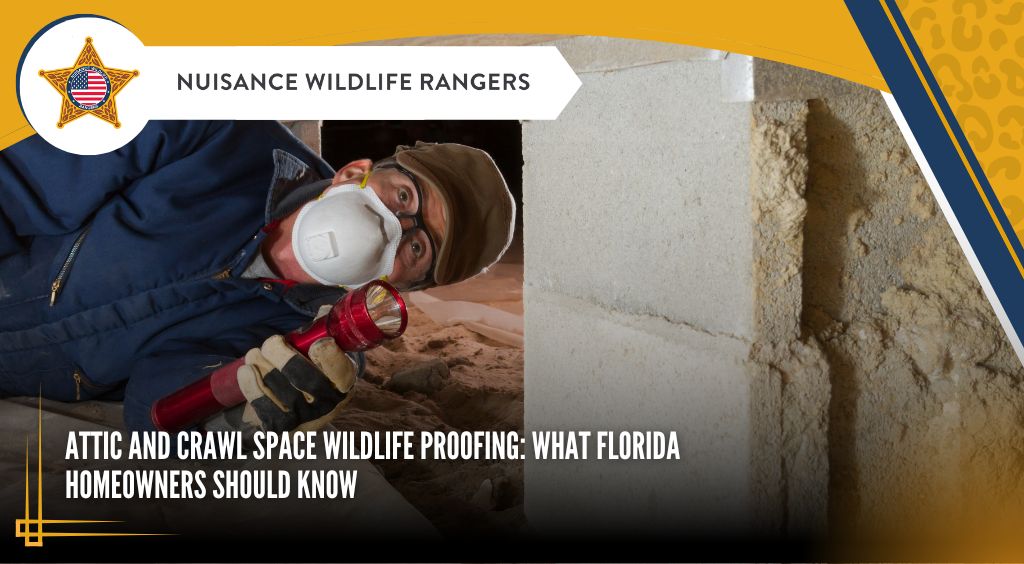
Florida is known for its warm weather, vibrant ecosystems, and, unfortunately, for homeowners, frequent encounters with wildlife in places they don’t belong. From raccoons to bats, squirrels to skunks, wild animals regularly find their way into attic spaces, crawl areas, and even chimneys, causing damage, spreading diseases, and turning your peaceful home into a nesting ground. But with the right preventative measures, you can wildlife-proof your attic and protect your property year-round.
Here’s what Florida homeowners should know about keeping their living spaces safe from unwelcome visitors.
Your home, especially your attic and crawl space, offers shelter, warmth, and protection—everything wild animals instinctively seek, particularly in early spring and early fall when mating and nesting are common. These animals aren’t looking to cause trouble. They’re simply following survival instincts.
But instincts can quickly lead to costly repairs and serious health risks for humans. Once animals gain access, they build nests, chew wires, leave behind feces and urine, and sometimes die inside walls or insulation.
Common Florida wildlife species that invade attic spaces include:
If there is an animal in your attic, you might be wondering how much the removal costs. Attic removal can range in price, often depending on the type of animal and the extent of the infestation. At Nuisance Wildlife Rangers, we can provide an estimate after inspecting your attic.
Wildlife in your attic or crawl space is more than a nuisance—it’s a threat to your health, safety, and home value.
Animal feces and urine can harbor diseases such as leptospirosis, histoplasmosis, and salmonellosis. Droppings left behind can dry out and become airborne, affecting indoor air quality. Parasites like fleas, ticks, and mites often hitch a ride with these animals, spreading to pets and people alike.
Animals chew wires (risking fire), tear insulation, damage HVAC, and create potential entry points for other critters. Raccoons can cause thousands of dollars in structural damage. Water damage often follows compromised roofing or vents.
Nighttime noise in your attic—scratching, scurrying, thumping—is often the first sign of animal activity. Odors from nests, droppings, or deceased animals can spread to your living space, becoming intolerable.
Knowing the early signs of wildlife intrusion can help prevent long-term damage. The main signs of animals in your home include:
If you believe you have wildlife in your house, you should contact a professional animal removal company. At Nuisance Wildlife Rangers, we can trap and relocate any type of animal that may be living in your home.
Wild animals are clever and determined. If there’s a way in, they’ll find it. Entry points may include:
Even holes as small as a quarter can allow entry for mice or bats. While you might be able to seal entry points on your own, it’s hard to tell if an animal has already made their way in. DIYing could result in trapping wildlife inside your house, which highlights the need for professional help.
Walk your property and check for signs of damage or potential problem areas. Use a flashlight in your attic to spot light leaks. Look for small holes, chew marks, or animal activity signs like droppings or nests.
Hire a professional if you’re unsure. They’ll inspect from roof to crawl space, identify species-specific behaviors, and determine points of access.
Using durable building materials is key to making permanent repairs:
If animals are already inside, never seal entry points without ensuring they’re gone. A one-way door allows the animal to exit but not return. In some cases, live trapping and relocation (done by a licensed professional) may be necessary.
Caution: removing certain species like bats during their maternity season (May–August in Florida) is illegal. You must wait until the young can fly out on their own before installing exclusion devices.
When maintaining your yard and roof to prevent wildlife infestations, you should:
Regular maintenance reduces access points and discourages wildlife from getting close.
DIY exclusion works for minor fixes, but more complex infestations or the presence of protected species require expert handling. Wildlife removal experts can locate, trap, and remove animals without harming them in the process.
They also provide:
You should call an expert at the first sign of an animal infestation. Instead of trying to find the wildlife yourself, an expert can come in and make sure the job is done correctly the first time.
If you are trying to protect your home from wildlife intrusions in Florida, you should:
Wildlife proofing your attic and crawl space is not just a one-time task—it’s a preventive strategy that protects your home, your health, and your peace of mind. By understanding animal behavior, inspecting your property, sealing entry points, and maintaining your home’s exterior, you can ensure critters stay in the wild—where they belong.
For Florida homeowners, being proactive is the best way to prevent damage and avoid costly repairs. And if you’re ever in doubt, don’t wait—contact a professional wildlife removal service to inspect, secure, and safeguard your property.
Contact Nuisance Wildlife Rangers today to learn more about how we can protect your home from wildlife intrusions.
Yes, evidence of wildlife intrusion—like lingering odors, damaged insulation, or stains from animal feces—can significantly reduce a home’s appeal to buyers. Even after removal, documentation of remediation is often required during a sale. Proof of professional cleanup and wildlife-proofing can help restore value and reassure potential buyers.
If you’re hearing noises again or seeing signs of intrusion, it’s possible that:
Contact a wildlife specialist for a secondary inspection. Some companies offer warranties or ongoing monitoring services to address re-entry risks.
Ultrasonic devices may work temporarily on some species, but their effectiveness is inconsistent and often short-lived. Animals can become accustomed to the sound, and solid building materials (like attic walls) can block the waves. They should be considered a supplementary measure—not a standalone solution.
Post-removal cleanup is crucial. It involves:
In Florida, professional wildlife remediation teams follow biohazard protocols and often include attic restoration in their services.
Wildlife movement tends to be more sporadic and erratic—scratching, scampering, or thumping, usually at dawn or dusk. HVAC systems or settling wood make more rhythmic or consistent sounds. You can place a thin layer of flour near suspected areas (like attic access points) overnight to check for footprints as a basic DIY test.
Not always. Many standard homeowners’ insurance policies exclude damage caused by rodents or vermin, but may cover sudden incidents (like a raccoon tearing through the roof). Coverage varies by provider, so it’s wise to review your policy and speak with your agent about exclusions related to animal damage.
 Call Now
