
Welcome toNuisance Wildlife
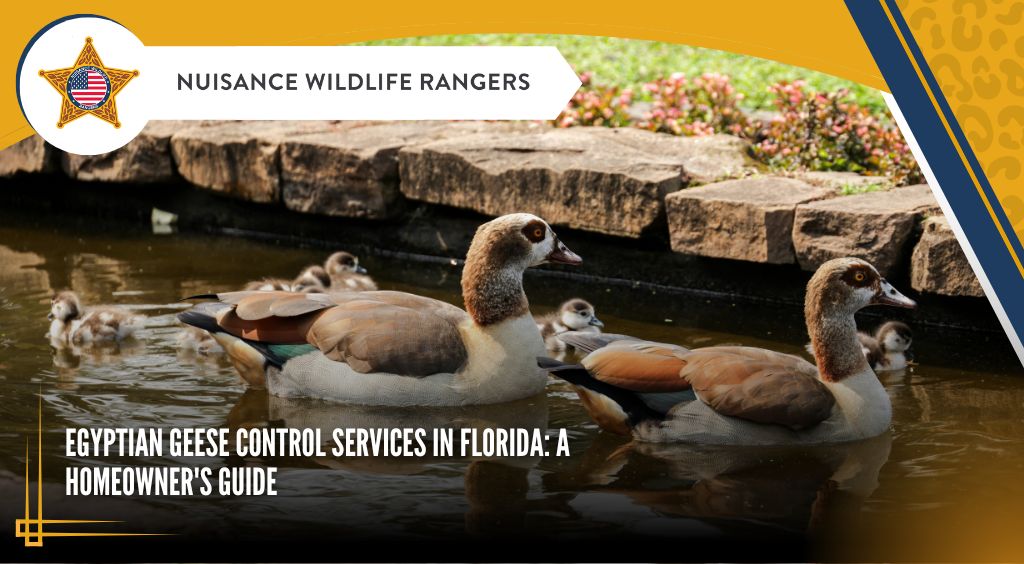
If you’re a Florida homeowner or property manager dealing with the nuisance of Egyptian geese, you’re not alone. These striking birds, native to Africa, have become one of the most common exotic animals in the state. Their presence near water bodies, golf courses, open fields, and residential yards is not just a visual spectacle but a growing environmental and legal challenge.
Allowing Egyptian geese in your yard can lead to aggressive behavior, especially during nesting season, posing a safety risk to pets and children. Their excessive droppings can contaminate lawns and nearby water bodies, increasing health hazards. Additionally, they can damage grass and landscaping while driving away native wildlife.
This guide explores how Egyptian geese affect Florida’s ecosystems, why their control is crucial, and how professional wildlife removal services can help you manage this invasive species effectively—without breaking any federal laws like the Migratory Bird Treaty Act.
Egyptian geese (Alopochen aegyptiaca) are waterfowl native to Africa, commonly found along the Nile River. But in Florida, they’re an invasive species. While visually appealing—with large dark brown circles around their eyes and bold plumage—these birds are anything but harmless.
They first started making appearances in Florida through the exotic pet trade and escapees from private aviaries. Thanks to easy access to wetland habitats, rivers, ponds, and lakes, they have become well-established in places like Miami-Dade, Palm Beach, and even occasional offshore islands.
Egyptian geese are highly territorial, especially during nesting season. They are known to chase off other animals, including common geese, ducks, and even humans, to defend their territory. Their aggressive demeanor can disturb peaceful parks, lawns, and golf courses.
Their feeding habits include grazing on grass, aquatic plants, insects, and frogs—leading to the destruction of native vegetation and creating competition for native birds and other animals.
They also produce a significant amount of droppings, which contaminate water bodies, lawns, and recreational spaces, increasing health risks for humans and pets.
Unlike many birds, Egyptian geese have no strong seasonal reproduction cycle in Florida due to the warm climate. Females can nest multiple times per year, producing large broods that survive easily thanks to a few natural predators. This can cause further infestations in a short period.
Yes, Egyptian geese are considered an invasive species in Florida. Although native to Africa, they have established wild populations across the state, disrupting local ecosystems, outcompeting native birds, and causing property damage. Their rapid reproduction and adaptability to wetland habitats, lawns, and open fields make them a growing concern for both wildlife officials and residents.
Their presence is especially problematic in areas like golf courses, parks, and residential communities where they congregate in large numbers, leave behind unsanitary droppings, and exhibit aggressive territorial behavior. Because they have few natural predators in Florida and face minimal seasonal limitations on breeding, their populations can quickly spiral out of control, leading to long-term environmental and property management issues.
Yes—and no. Egyptian geese are not native to the U.S., but due to the broad umbrella of the Migratory Bird Treaty Act (MBTA), they receive some federal protection. This means that you cannot harm, hunt, or remove them without proper permits or working with a licensed wildlife professional.
Failing to follow these regulations can result in serious federal law violations, fines, and even criminal charges.
If you’re wondering whether you’ve got Egyptian geese on your property, here are a few behavioral and visual clues:
If you have an Egyptian goose infestation, it’s a good idea to call a wildlife control company. Trying to remove these birds on your own could lead to legal repercussions, especially if you harm them. Companies like Nuisance Wildlife Rangers can remove Egyptian geese humanely and in accordance with the law.
Professional wildlife control services in Florida are trained to get rid of Egyptian geese safely, legally, and humanely. Here’s what effective Egyptian goose control in Florida usually includes:
Experts assess your location, determine the population size, and analyze roosting and feeding patterns. This helps in creating a targeted control strategy.
One of the best long-term strategies is to make your property less attractive. Professionals may recommend:
Professionals may install visual deterrents such as predator-shaped kites, lasers, or even decoys like muscovy duck models to scare geese away. However, these require proper placement and maintenance to stay effective.
In coordination with wildlife authorities, services may perform egg addling (shaking or oiling eggs to prevent hatching) or legally remove nests to limit reproduction.
Professionals might use sound-based deterrents (distress calls, predator sounds) during peak activity times to deter geese from settling.
Installing low fencing near water bodies and lawns can make it harder for geese to reach their preferred feeding and roosting areas.
You may think a few fake owls and shouting might help, but Egyptian geese are smart and adaptable. In fact, ineffective attempts can make them even more resistant to future deterrents.
More importantly, trying to relocate or harm them without a permit violates federal laws, exposing you to steep penalties.
When choosing a provider, ensure they:
Reputable companies will help protect your property while preserving the natural balance of your environment.
Egyptian geese may look elegant gliding across your pond, but their presence can quickly spiral into a full-blown nuisance—for you, your pets, and your community. Through smart, humane, and legal intervention, you can protect your property, reduce environmental impact, and restore peace to your yard, parks, or golf course.
Whether you’re a homeowner, HOA, or business owner, don’t wait for the spread to get out of hand. Work with trained professionals who know how to deter, manage, and rid your property of these problematic birds—once and for all.
At Nuisance Wildlife Rangers, we can remove Egyptian geese from your property once and for all. We use humane removal methods and assist with habitat modification to prevent them from returning. Contact us for more information on our bird removal services.
Yes, Egyptian geese can carry and spread pathogens such as E. coli, Salmonella, and Campylobacter through their droppings. These can contaminate soil and water, posing health risks to humans and pets who come into contact with affected areas.
Unlike many migratory birds, Egyptian geese in Florida breed year-round due to the warm climate. However, peak nesting activity often occurs during late winter and early spring, when they become more aggressive and visible.
In Florida, their natural predators are limited. Occasional threats may include raccoons, foxes, or large birds of prey, but these rarely control the population effectively due to the geese’s size, alertness, and nesting habits in urban or semi-urban environments.
Absolutely. Feeding encourages dependency, reduces their natural foraging behavior, and increases territorial aggression. It also attracts more geese to the area, accelerating the risk of overpopulation and property damage.
Yes. Unauthorized trapping, harming, or relocating of Egyptian geese may violate the Migratory Bird Treaty Act and other local wildlife laws. Fines and legal action can result if removal is not conducted through licensed professionals.
The timeline varies depending on the size of the population and the methods used. Most properties see noticeable improvement within a few weeks, but long-term success often requires ongoing deterrents and habitat modifications to prevent their return.
 Call Now
