
Welcome toNuisance Wildlife
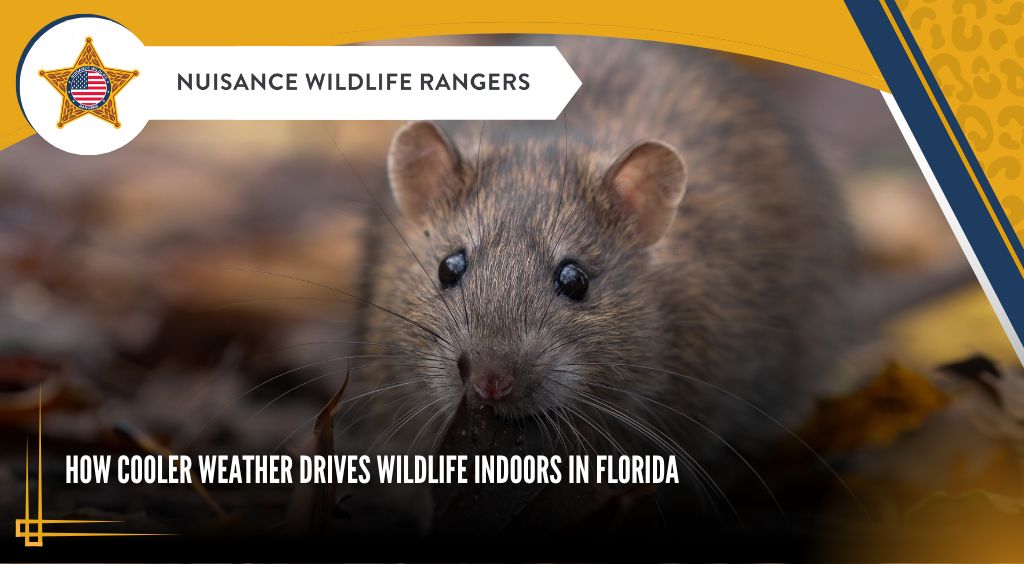
When the temperature dips—even modestly—in Florida, it doesn’t just affect people with heavier jackets and extra blankets. The shift also nudges wildlife to adopt new behaviors, putting your home squarely on their radar. For homeowners in Florida who may require wildlife removal services, understanding how cooler weather triggers animal intrusion is key to prevention. This article explains why wild animals move inside, which species are most likely to show up, and what you can do to protect your home.
Florida may lack the snow‑covered winters of northern states, but that doesn’t mean wildlife isn’t affected by cooler conditions. As temperatures drop, animals seek shelter, warmth, and accessible food.
According to the Florida Fish and Wildlife Conservation Commission (FWC), when prolonged cold weather strikes, animals such as manatees, sea turtles, and iguanas face severe stress.[1]
Cold weather also triggers den-seeking behavior in a variety of animals. This might push wildlife to search for shelter inside human homes, especially if they are living in a suburban or urban area.
Essentially, cooler weather changes the balance of risk and necessity for wildlife: they might be exposed outdoors with fewer natural shelters, or their food sources may decline, so your attic or crawlspace begins to look appealing.
Several species are known to take advantage of homes during cooler weather in Florida. Understanding the offenders can help you spot trouble early.
These opportunistic animals look for warmth, nesting material and steady food access. They can squeeze through tiny openings and often choose attics, wall voids or crawl spaces.
Tree‑climbing or roof‑access animals such as squirrels and raccoons find attics, roofline gaps and soffits particularly attractive when cooler, wetter weather arrives.
Florida’s reptile population also reacts to cooler conditions. For example, the FWC mentions non‑native iguanas going into a torpor when temperatures drop, sometimes falling from trees.[1] Additionally, as food becomes scarcer in the fall and cooler weather approaches, snakes may follow rodents into homes or garages.
If animals have entered your home or are attempting to do so, there are signs you can look for:
Early detection can decrease the amount of damage caused by wildlife, saving you money in the long run. If you believe there are animals in your home, you should contact a wildlife removal service like Nuisance Wildlife Rangers.
For homeowners in Florida, wildlife intrusion isn’t just an annoyance—it can become a serious liability.
You don’t have to wait until an intrusion happens. Here are proactive steps tailored for Florida homeowners to reduce risk:
If you observe the following, it’s time to call a licensed wildlife removal expert rather than attempt a DIY fix:
If you are facing one of the mentioned situations, you need professional help. Nuisance Wildlife Rangers is here to help you remove and relocate any species of wildlife you might be dealing with. Additionally, we use humane methods, which means you never have to worry about us harming the animals in the process.
Cooler weather in Florida may not resemble northern winters, but its effect on wildlife behavior is real—and consequential. Animals driven by the need for warmth, shelter, and food can view your home as an ideal getaway. For homeowners, this means vigilance, timely inspection, and proactive safeguards.
By understanding what drives wildlife indoors and taking practical steps now (before the surge happens), you can protect your property, your family’s health, and your peace of mind. If you’re noticing signs of wildlife intrusion—or just want to prep for the season ahead—don’t hesitate to reach out to a wildlife removal professional.
Contact Nuisance Wildlife Rangers today for more information on how we can help you evict the wildlife from your home.
Yes. Animals like raccoons, squirrels, and birds can damage exterior vents, soffits, fascia boards, and roof shingles during attempted entry. Even if they don’t gain full access, this can leave your home exposed to water leaks, drafts, or future infestations by insects or rodents.
Most wildlife activity peaks at dawn and dusk. Nocturnal animals like rats, raccoons, and opossums are especially active overnight, which is why homeowners often hear noises in the attic at night. Diurnal species like squirrels are more active in the early morning.
While homeowners are allowed to trap and remove some nuisance animals, Florida law restricts how and when you can do so. Certain species (like bats or migratory birds) are protected, and relocation without a permit may be illegal. Always check FWC regulations or consult a licensed wildlife control operator to stay compliant.
At minimum, inspect your home twice per year—once in early fall and again in early spring. Fall is key because it’s when animals seek winter shelter. However, after any major storm or cold snap, it’s smart to do a quick visual check for new access points or damage.
It depends on your policy. Most standard homeowners insurance covers sudden and accidental damage, but may exclude gradual damage or infestations (like long‑term rodent nesting). Coverage can also vary depending on the animal. It’s best to review your policy or speak with your agent to clarify wildlife-related coverage.
Ultrasonic devices and store-bought repellents may deter some animals temporarily but are rarely a long-term solution. Wildlife can adapt quickly, especially if your home continues to offer shelter or food. Physical exclusion, regular inspections, and professional removal remain the most effective strategies.
References:
 Call Now
