
Welcome toNuisance Wildlife
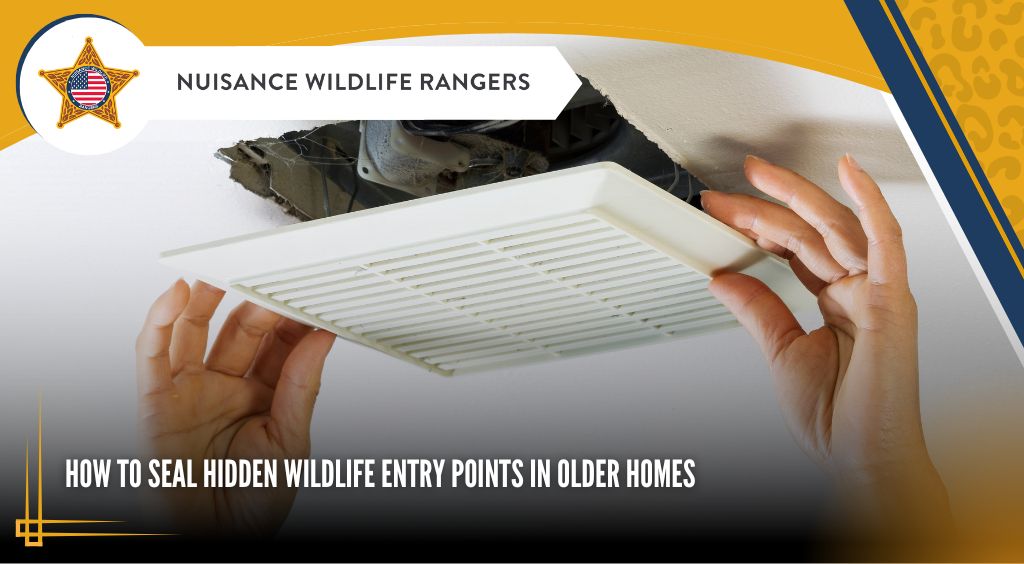
Older homes have charm. But beneath the nostalgic woodwork and classic finishes lurk gaps, cracks, and crevices that scream one thing to wild animals: easy access.
From squirrels in the attic to raccoons in the crawl space, wildlife intrusions are more than a nuisance — they’re health risks, fire hazards, and sources of long-term structural damage. In Florida’s warm, subtropical climate, the problem is even more pronounced. As temperatures drop elsewhere, animals migrate south — and your home could be their next winter resort.
But here’s the good news: sealing wildlife entry points is a straightforward, high-impact way to animal-proof your home. Let’s dive into what you need to know.
Older homes tend to have aging materials, warped wood, and decaying fascia boards. These weaknesses become prime targets for wild animals looking for food, shelter, or nesting space. Gaps around utility lines, crawl space vents, and attic vents offer easy entry for everything from rats to raccoons.
Warm climates like Florida’s also mean wildlife doesn’t hibernate as much — they’re active year-round, constantly on the hunt for homes with available food sources, water, and shelter.
Wildlife is clever. Even the smallest holes, gaps, or vents can serve as an invitation.
Here are the most common animal entry points in older Florida homes:
Small gaps (as tiny as ¼ inch) are enough for mice. Squirrels only need about 1.5 inches. Raccoons? Around 4 inches. Once in, they can cause significant property damage, leave urine stains, bring in nesting material, and invite other pests.
Sealing entry points isn’t about a quick patch job. It’s about long-term protection. Here’s a systematic approach:
You can’t seal what you can’t see.
Focus on potential entry points and the most common entry points we outlined earlier.
Look for:
Quick fixes won’t cut it. Invest in permanent repairs using durable materials:
Avoid plastic-based materials — rodents can easily chew through them.
When sealing gaps, you should:
Even a well-sealed home can become a target if you attract animals.
If your home has multiple or hidden entry points — or you’re already dealing with an infestation — it’s time to call professionals.
Contact Nuisance Wildlife Rangers, one of the best wildlife exclusion services in Florida. They’ll not only remove current animals but also provide preventive measures for future intrusions.
Florida law protects many species of wildlife. According to the Florida Fish and Wildlife Conservation Commission (FWC), it is illegal to trap or remove certain animals without a permit. Improper removal can result in fines or worse — harm to protected species like bats or certain birds.
Sealing should always be done after verifying that no animals are currently inside. Sealing an animal in can cause death, foul odors, and secondary infestations of other pests.
Failing to seal your home properly can lead to:
To avoid expensive damage and foul odors from trapping animals in your home, you should contact professional help. At Nuisance Wildlife Rangers, we can trap and relocate animals before sealing all of the entry points that allowed them access to your home.
Sealing wildlife entry points in older homes isn’t a one-and-done fix. It’s a routine part of Florida homeownership — especially for those living near wooded areas, lakes, or older developments.
Keeping wildlife out isn’t just about avoiding pests — it’s about protecting your home, your health, and your peace of mind.
If you’re in Florida and concerned about wild animals making themselves at home, it’s time to act. Prevent problems before they start, and make sure your home stays yours, not a nesting ground for unwanted visitors.
Want help identifying entry points or choosing the right sealing materials? Contact Nuisance Wildlife Rangers; they’ve seen it all and can help you animal-proof your space for good.
Look for subtle signs like scratching or scurrying sounds (especially at night), foul odors (from droppings or urine), displaced insulation, or visible tracks near entry points. You may also notice disturbed attic insulation, chewed wires, or nesting material. If in doubt, a wildlife inspection from a licensed professional is recommended.
In Florida, late summer to early fall is ideal. This gives you time to seal up before cooler temperatures drive animals indoors. However, because Florida wildlife activity continues year-round, it’s wise to inspect and seal as needed throughout the year.
No. While expandable foam is great for insulation and small cracks, it should never be used alone to deter animals. Rodents and raccoons can easily chew through foam. Always pair it with hardware cloth, metal flashing, or copper mesh for true protection.
Ultrasonic devices may have short-term effects on some animals, but they are not a reliable long-term solution. Animals often adapt to the noise or avoid only the immediate area. Physical exclusion (sealing entry points) remains the most effective method.
Stop work immediately and contact a licensed wildlife removal specialist. Sealing an animal inside can lead to death, decomposition, and health risks. Professionals have the tools and permits to safely remove and relocate wildlife per Florida law.
Yes. Pest control typically handles insects and rodents using traps or chemicals. Wildlife exclusion focuses on humane, structural prevention — sealing access points and ensuring animals cannot return. Many homeowners in Florida use both services for full coverage.
 Call Now
