
Welcome toNuisance Wildlife
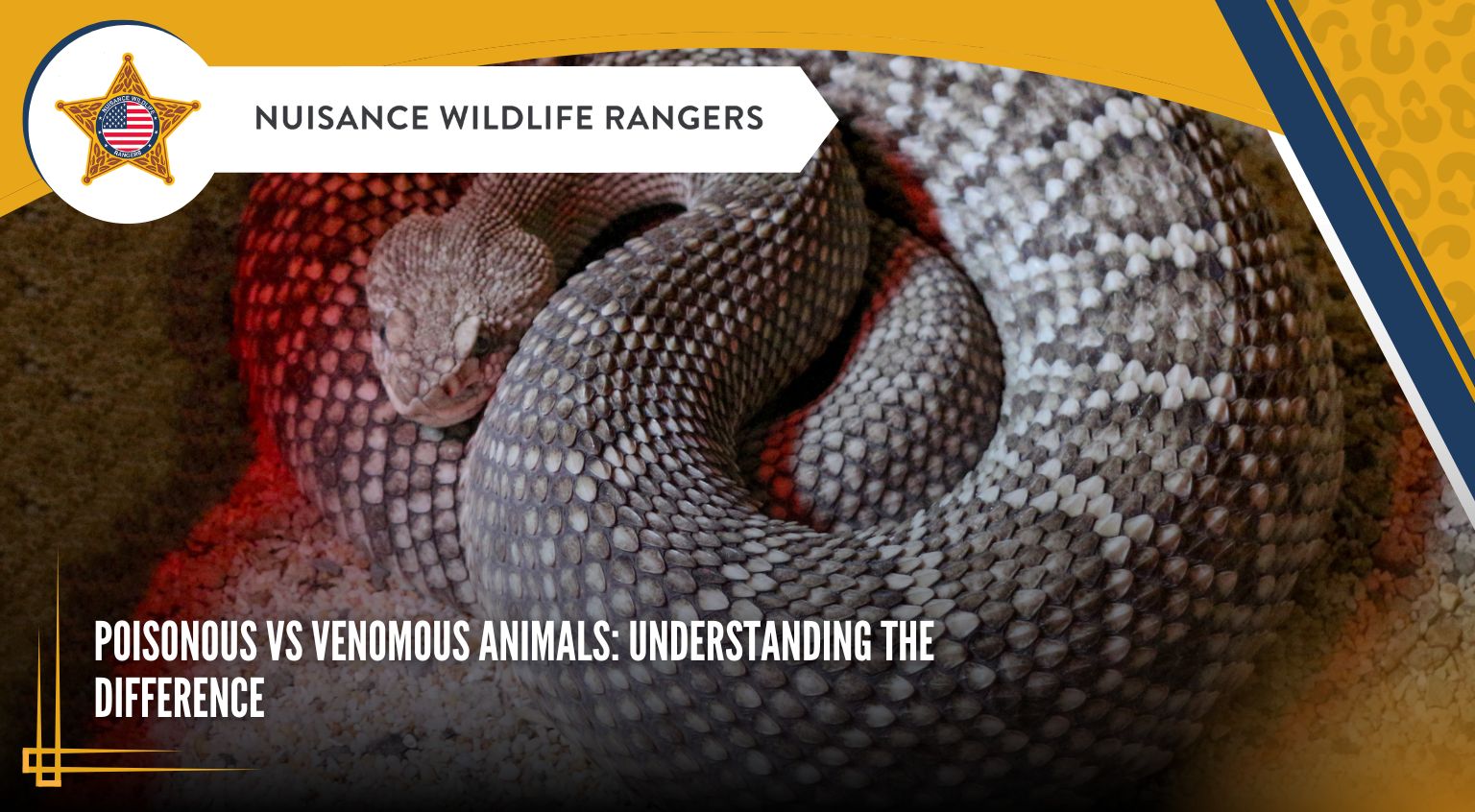
Florida’s rich biodiversity makes it one of the most unique states in the U.S. when it comes to wildlife. However, it also means residents and businesses are more likely to encounter dangerous creatures, especially those that are venomous or poisonous. Understanding the difference between poisonous and venomous animals is essential—not only for safety but also for effective wildlife removal and management.
Though often used interchangeably, poisonous and venomous do not mean the same thing.
Venomous animals inject toxins via a bite, sting, or other specialized body part (fangs, spines, or stingers). Their venom is a weapon to subdue prey or deter threats.
On the other hand, poisonous animals release toxins when they are eaten, touched, or sometimes even smelled. Their toxins are usually found in the skin, organs, or other tissues.
A simple rule:
“If it bites you and you get sick, it’s venomous. If you bite it and you get sick, it’s poisonous.”
Florida is home to a wide variety of venomous and poisonous animals, some of which are potentially deadly to humans and pets. If you’re dealing with unwanted wildlife, knowing the difference can protect your family and guide professionals in humane and safe wildlife removal.
There are six species of venomous snakes in Florida. The most notable include:
These snakes use their own venom to immobilize or kill prey. A bite can cause extreme pain, swelling, anaphylaxis, and even death if left untreated.
Florida is home to two dangerous spiders:
These venomous creatures inject neurotoxins that affect the nervous system. The venom may cause muscle cramps, vomiting, and, in rare cases, severe complications in children and the elderly.
Florida’s coastal waters and freshwater areas host some of the most venomous fish:
The spines of these fish can inject venom that causes severe pain, swelling, and even tissue necrosis. Lionfish, an invasive species, are particularly problematic in Florida due to their threat to native marine ecosystems.
While many poisonous animals are less aggressive than venomous ones, they can be equally dangerous if mishandled.
Florida is home to poisonous toads, such as the Cane Toad (also known as the Bufo Toad). This toad secretes a toxic chemical from its glands that can cause:
Frogs like the Golden Poison Frog and Poison Dart Frog, found in Central and South America, produce some of the most poisonous substances known in nature. Although not native to Florida, the exotic pet trade has led to sightings in some urban and suburban areas.
Though not native to Florida, fire salamanders and other toxic animals (those that secrete toxins externally) are sometimes kept as pets or introduced illegally. Their skin secretes toxic substances capable of causing respiratory distress and skin irritation.
Both poison and venom are evolutionary tools designed to:
According to evolutionary biologists, venom has evolved over 100 times independently in various species, including snakes, spiders, fish, lizards, and wasps.
Some animals can even produce their own poison or venom, while others accumulate toxins from their diet, such as toxic insects or plants.
The inland taipan, considered the most venomous snake in the world, can kill a human in under an hour. Fortunately, it’s not found in the U.S.
The blue-ringed octopus, often called one of the most poisonous animals globally, carries enough venom to kill 26 adult humans. Though not found in Florida waters, its cousin, the Atlantic blue-ringed octopus, may occasionally appear due to global warming and shifting marine patterns.
Some species, like the slow loris, are both venomous and poisonous. They deliver venom through a bite and have glands that produce toxic proteins.
For most Florida residents, bites and exposures are rarely fatal but can lead to hospitalization if left untreated, especially in children or those with compromised immune systems.
If you find a snake, frog, lizard, spider, or even a strange-looking fish in or near your home, calling a professional wildlife removal service in Florida is the safest choice.
Professionals are trained to:
Knowing whether you’re dealing with venomous or poisonous animals helps professionals protect you, your pets, and local ecosystems from harm.
Florida’s vibrant environment is home to many venomous and poisonous animals. From venomous snakes and spiders to poisonous toads, understanding the difference between poisonous and venomous animals could save a life. Whether you’re a homeowner, business owner, or nature enthusiast, being informed helps you make safer decisions and take swift action during wildlife encounters.
If you’re ever in doubt, never try to handle these animals yourself. Contact a licensed Florida wildlife removal expert like Nuisance Wildlife Rangers to handle the situation safely and legally.
Yes, though it’s rare, some animals are both. For example, the slow loris has venomous bites and also secretes toxic substances through glands. In most cases, animals evolve to be either venomous or poisonous, but not both, due to the different biological mechanisms required.
Some animals, like certain mongoose species or opossums, have developed resistance to specific snake venoms. However, common household pets like dogs and cats are highly vulnerable. A Cane Toad encounter, for example, can be fatal to pets if not treated immediately.
Absolutely. Even non-lethal exposure can lead to serious medical issues such as tissue damage, secondary infections, or neurological effects. Allergic reactions, including anaphylactic shock, can occur even in healthy adults from minimal exposure to some toxins.
There is a common myth that baby venomous animals are more dangerous because they can’t control their venom delivery. While some juveniles may inject more venom per bite, adults typically carry larger venom loads overall. Risk depends more on species than age.
Yes. Warmer months, especially spring and summer, see increased activity among snakes, toads, and spiders as they hunt and breed. Flooding and hurricanes can also displace animals, bringing them closer to residential areas.
Florida law allows property owners to protect themselves from immediate threats, but many species—especially native snakes—are protected. It is illegal to harm or kill certain animals without proper permits. The best course of action is always to contact a licensed wildlife removal professional.
 Call Now
