
Welcome toNuisance Wildlife
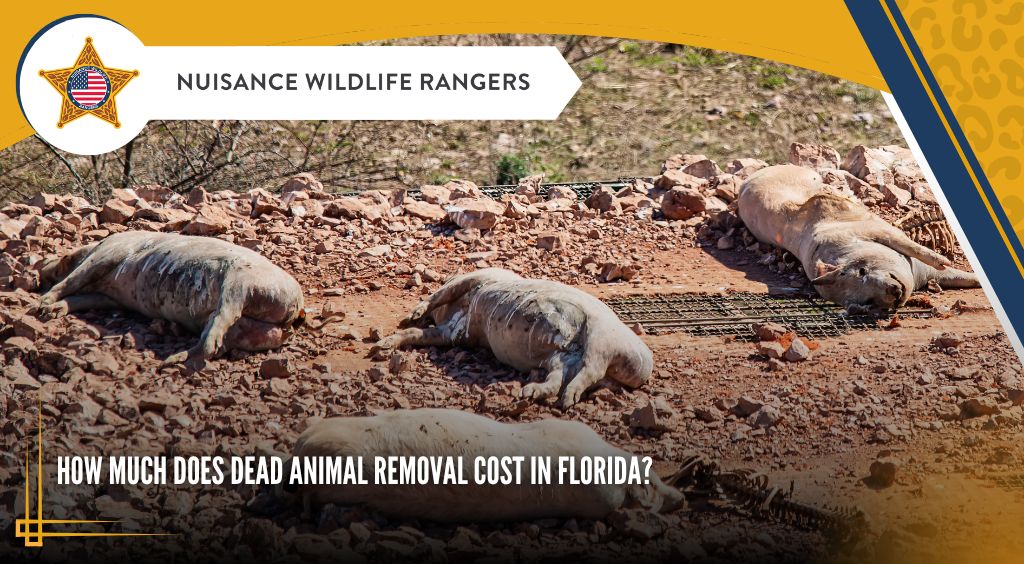
Finding a dead animal on your property—whether in your yard, garage, attic, walls, or crawlspace—is unpleasant and can pose real health risks. Dead wildlife can attract insects, spread bacteria, and create strong odors that linger for weeks if not handled properly. For these reasons, most Florida residents turn to professional dead animal removal services. But how much does this essential service cost? Let’s break it down clearly, in simple terms that help you make an informed decision.
Before talking price, it helps to understand what professionals do when they remove a carcass:
Because of these steps, the cost varies with how complex your situation is.
Florida wildlife removal companies base pricing on a mix of effort, accessibility, and cleanup needs. Here’s a realistic picture of what you’ll see in 2026:
Simple jobs—such as removing a carcass from an open yard or easily accessible space—typically fall in this range. If the animal is outside and straightforward to reach, many companies charge closer to the lower end.
When the carcass is inside a home (attic, wall, crawlspace), pricing tends to land toward the higher end ($200–$300).
This usually covers cases where technicians must access tighter spaces or deal with partial structural openings (e.g., attic conversion openings). The cost includes cleanup and basic deodorization.
Multiple carcasses, difficult access (inside walls, ceilings, or under slabs), and extensive cleanup with decontamination can push costs above $500.
Professional odor mitigation or removal of associated wildlife damage may raise the price further.
These figures reflect typical service prices in Florida markets and align with broader national cost guides.
Local service providers in Tampa Bay and surrounding areas note basic outdoor removal fees around $129, rising to about $249 for interior carcass location, extraction, and deodorization.
Pricing isn’t set in stone. These key variables influence how much you’ll pay:
A dead animal in your yard costs less to remove than one inside walls or an attic. Hidden spaces require cutting into the building structure and more labor.
Smaller carcasses (rats, squirrels) are usually easier and cheaper to remove compared to larger animals like raccoons, possums, or dogs. Larger animals may require more effort and protective equipment.
If technicians can’t easily reach the animal—such as behind drywall or in roof structures—this adds time and cost because more invasive extraction methods are needed.
Decomposition fluids, maggot infestations, and strong smells require sanitizing and deodorizing—services that often affect total cost.
Some companies charge extra if your property is outside their standard service area, or they may include a minimum service fee just to visit your home.
When budgeting for removal, it’s important to know what might cost extra:
These services are usually offered separately or bundled, depending on the company you hire.
Some homeowners consider removing small dead animals themselves. While it may be tempting for animals in obvious outdoor spaces, professionals are often worth the cost:
In Florida, where wildlife is abundant and diverse, trained technicians offer significant value by making sure the job is done right—especially for hidden or interior carcasses.
If you discover a dead animal on your Florida property:
Professional dead animal removal not only eliminates unpleasant odors and hazards but also gives you peace of mind knowing the job was handled safely and correctly—an investment well worth the cost for most homeowners.
When you discover a dead animal on your property, time matters. Odors worsen quickly, bacteria can spread, and secondary pest problems can develop if the issue is not handled properly. Working with an experienced team ensures the carcass is safely removed, the affected area is sanitized, and your home is protected from further wildlife intrusion.
At Nuisance Wildlife Rangers, we provide fast, reliable dead animal removal services throughout Florida. Our trained technicians locate the source, remove the animal safely, and thoroughly clean and deodorize the area so you can get back to normal as quickly as possible. We also identify entry points and offer exclusion solutions to help prevent future problems.
If you need professional dead animal removal in Florida, don’t wait for the problem to get worse. Contact Nuisance Wildlife Rangers today to schedule an inspection or request a quote. Our team is ready to help you restore your home safely and efficiently.
The most common sign is a strong, persistent odor that gets worse over several days. You may also notice an increase in flies, maggots, or other insects in one specific area of your home. In some cases, stains may appear on ceilings or walls if decomposition fluids seep through. If the smell is strongest in the attic, walls, or crawlspace, it is likely a hidden carcass.
Without removal, the odor can last anywhere from a few days to several weeks, depending on the size of the animal and environmental conditions like heat and humidity. Florida’s warm climate can speed up decomposition, making smells stronger and more noticeable. Professional removal and deodorization significantly reduce how long the odor lingers.
Yes, it can be. Decomposing animals may carry bacteria, parasites, and pathogens. They also attract insects such as flies and beetles, which can spread contamination to other parts of your home. While not every situation results in illness, it is safer to have the carcass removed and the area sanitized properly.
Coverage depends on your specific policy and the circumstances. Some homeowners’ insurance policies may cover removal and related damage if the animal caused a covered peril, such as chewing through wiring that led to additional damage. However, routine wildlife removal is often not covered. It’s best to review your policy or contact your insurance provider directly.
In Florida, common culprits include rats, squirrels, raccoons, opossums, and occasionally bats. These animals often enter attics, wall voids, or crawlspaces seeking shelter. If one becomes trapped or dies inside, it can create odor and sanitation issues that require professional removal.
Prevention focuses on wildlife exclusion. This includes sealing entry points, repairing damaged vents, securing soffits, trimming tree branches away from the roofline, and ensuring crawlspace access points are tightly closed. Regular property inspections—especially before and after storm season—can help catch vulnerabilities before animals move in.
 Call Now
