
Welcome toNuisance Wildlife
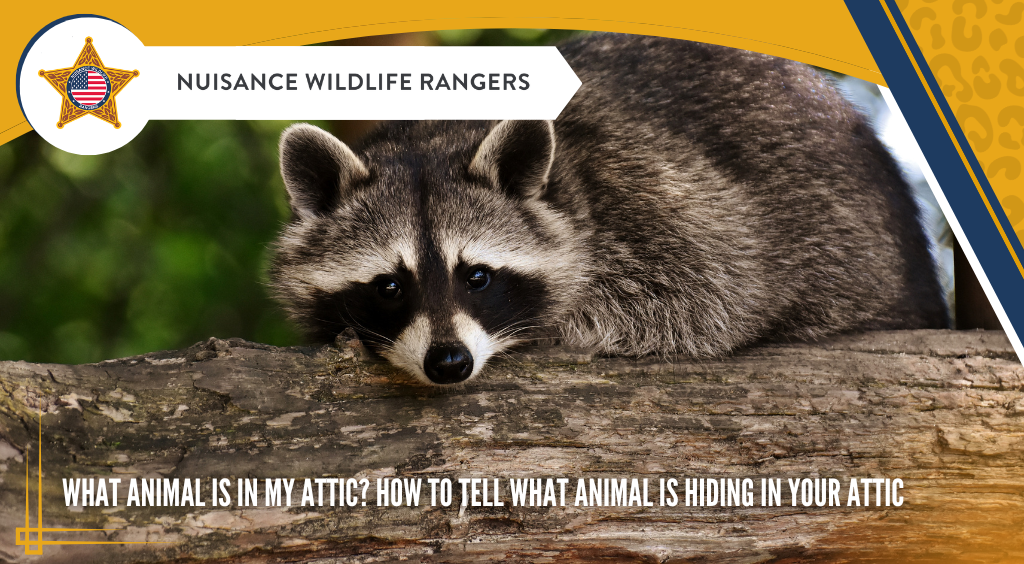
If you’re hearing strange noises above your ceiling, you’re probably asking yourself: what animal is in my attic?
Attics provide warmth, shelter, and protection from predators, making them an attractive place for nuisance wildlife. In Florida, homeowners frequently discover raccoons, squirrels, rats, bats, birds, and other critters living in their attic, walls, crawl space, or insulation.
Knowing how to tell what animal is in your attic can help you take the right steps before significant damage occurs. Different species leave different clues, from scratching sounds and animal droppings to distinct animal noises and visible entry points.
In this guide, we’ll explain how to identify the most common attic invaders in Florida and when it’s time to call a professional wildlife control company. If you need wildlife removal services, contact the professionals at Nuisance Wildlife Rangers.
Many homeowners discover that an animal has made its home in their attic. But why do animals often seek out the shelter of this specific area of the house?
Your attic offers everything a wild animal needs:
Florida’s warm climate means many different species remain active year-round. Nocturnal animals are especially common attic invaders because homeowners often don’t notice them until they hear noises in the attic at night.
The first sign of an infestation is usually unusual noises in the attic. Paying attention to when you hear sounds can help narrow down which animal may be present.
One of the easiest ways to identify attic wildlife is by listening carefully to the sounds you hear. Here are some animals that may invade your attic and how to identify them by the sounds they make.
Raccoons are among the most common large animals found in attics in Florida.
Common raccoon noises include:
Raccoons are nocturnal species, so you’ll usually hear raccoon noises at night. However, if baby raccoons are present, you may also hear high-pitched chirping noises or kitten-like noises during the day.
Female raccoons frequently create dens in attics to raise their young. If you hear heavy movement combined with whining noises, there’s a good chance baby raccoons are involved.
Squirrel activity is most noticeable during the day.
You may hear:
Gray squirrels are the most common species found in Florida homes, although red squirrels and even flying squirrels can occasionally invade attics.
Unlike raccoons, squirrel activity typically starts in the attic early in the morning. If you hear scratching shortly after sunrise, squirrels are often the culprit.
Even flying squirrels can be difficult to identify because they are nocturnal animals.
Common signs include:
Flying squirrels often nest in groups, so the amount of noise may seem greater than expected for such small animals.
Rodents are among the most common attic pests.
Rats typically create:
Mice produce similar noises but are much quieter.
If you hear scratching in walls late at night, rats or mice are often responsible.
Bat noises are usually subtle.
You may hear:
Bats often enter through very small openings and gather near ridge vents, gable vents, or roof gaps.
Florida is home to numerous bat species, with 13 confirmed resident bat species throughout the state.
Bird noises are generally easiest to identify.
Common signs include:
Bird activity is most noticeable during the early morning hours and throughout the day. If you hear bird noises near vents or roof edges, birds may have entered through damaged screens or openings.
The sounds alone may not provide a complete answer. A thorough inspection often reveals additional clues. Here are some of the other clues you can use to determine what type of animal is prowling in your attic.
Paw prints around potential entry points can help identify the animal.
Raccoon tracks resemble tiny human hands.
Characteristics include:
Raccoons leave some of the biggest prints you’ll encounter around a house.
An opossum’s print is distinctive because the hind foot resembles a small hand.
Characteristics include:
Squirrel tracks often show:
Because squirrels hop, their hind feet usually appear ahead of their front feet in the track pattern.
Rats and mice leave smaller prints and often leave grease marks along walls.
Animal droppings are another important clue.
Raccoon droppings are:
Squirrel droppings resemble rat droppings but are typically slightly larger and more rounded.
Bat droppings often accumulate beneath roosting areas and crumble easily.
Bird waste is usually found near nesting materials and entry locations.
Because animal feces can carry diseases and parasites, homeowners should avoid handling them directly.
The CDC and wildlife experts warn that wildlife species such as raccoons and bats can carry diseases that pose risks to humans and pets.
Wildlife cannot get into your attic without access. Identifying access points and sealing them can prevent initial infestation or re-infestation.
Common entry points include:
A professional wildlife control inspection focuses heavily on identifying these potential entry points. In many cases, homeowners discover only one point of entry even when multiple access areas exist around the structure.
Tracks, droppings, and noises are fairly obvious signs of an animal infestation. But in some cases, animals may not give you such clear clues to their presence. Luckily, there are some other things you can keep an eye out for to determine if an animal is making a home in your attic.
Animals frequently tear apart insulation to create nests.
You may notice:
Raccoons and rodents often leave dark rub marks where they repeatedly travel.
Look for:
Many species gather nesting materials to raise young or create shelter.
Animals entering through the roof can create costly structural problems.
Raccoons are particularly destructive because they can tear shingles, soffits, and vents as they attempt to gain access.
Wildlife experts note that attic damage from raccoons can cost thousands of dollars in repairs when the animals establish dens inside homes.
Many homeowners assume wildlife will leave on its own. Unfortunately, that’s often not the case. In many cases, animals may decide to stay for the long term.
Animals that invade attics frequently:
The removal process should always focus on humane and effective solutions. The goal should be to remove the animal as safely as possible and return it to its natural habitat, far from your home.
Professional animal removal specialists can:
This is especially important for bats, which are protected in many situations and require specialized removal methods.
It can be challenging to determine when wildlife removal professionals are needed. However, it is critical to seek professional services as soon as you begin to suspect an animal’s presence in your attic.
Contact a wildlife control professional if:
The sooner the issue is addressed, the less damage your home is likely to experience.
Florida homeowners frequently deal with nuisance wildlife because attics provide ideal shelter for many different species. Whether you’re hearing raccoon, bat, bird, or unexplained attic noises, it’s important to act quickly.
A professional wildlife control expert can identify the animal, locate all potential entry points, safely complete the removal process, and help prevent future infestations. The faster the animal is carefully removed, the better protected your home, roof, walls, and insulation will be.
If you need wildlife removal services or have questions about animal infestation, contact the experts at Nuisance Wildlife Rangers. Reach out to learn how to identify signs of animals in your attic or to schedule removal now.
Yes. Rodents, squirrels, and other wildlife often chew on electrical wiring, which can create fire hazards and lead to costly repairs. Damaged wiring is one of the most serious risks associated with wildlife infestations and should be inspected promptly if animal activity is suspected.
Some animals can remain in an attic for weeks or even months before homeowners realize they’re there. Small animals such as mice, rats, and bats may go unnoticed for longer because they make less noise and can hide in hard-to-reach areas of the attic or behind walls.
Yes. Spring and early summer are common nesting seasons for many species, including raccoons and squirrels. During these periods, female animals often seek safe locations to raise their young. However, Florida’s warm climate allows wildlife activity to occur year-round.
Coverage varies by policy and provider. While sudden damage caused by wildlife may be covered in some situations, damage resulting from ongoing infestations is often excluded. Homeowners should review their policy details and speak with their insurance company for clarification.
Yes, if exclusion repairs are not completed. Animals frequently return to locations that previously provided shelter. Professional wildlife exclusion focuses on sealing access points and addressing conditions that attract wildlife to help prevent future infestations.
In many cases, homeowners can remain in the house, but wildlife should be addressed as soon as possible. Animals can contaminate insulation, damage property, introduce parasites, and create health risks through droppings and urine. Prompt removal helps minimize these concerns and prevents the problem from worsening.
 Call Now
