
Welcome toNuisance Wildlife
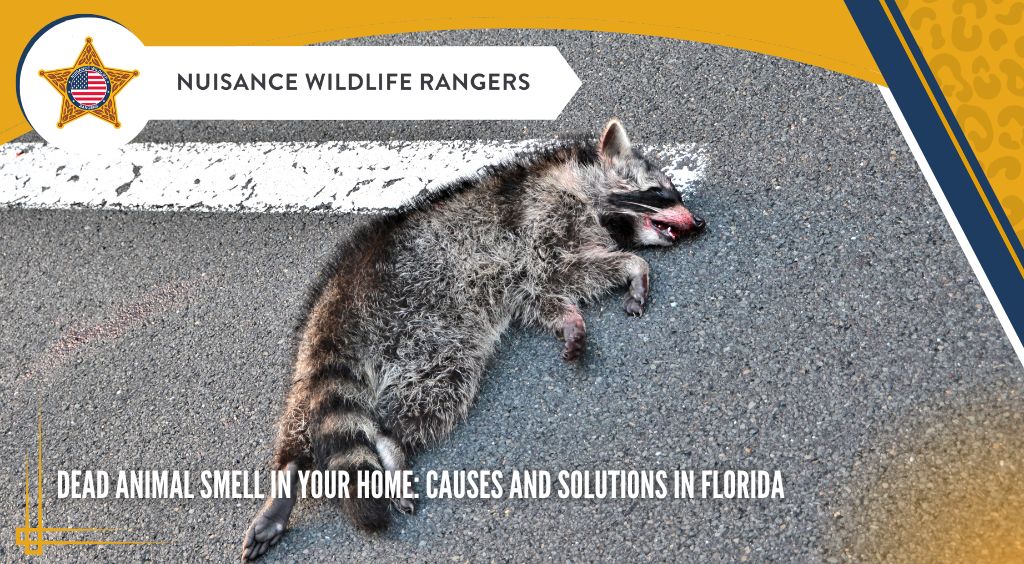
A dead animal smell inside your home is more than just unpleasant. It can quickly make your house uncomfortable, affect indoor air quality, and sometimes point to a larger wildlife problem. In Florida, warm temperatures speed up decomposition, making dead animal odors stronger and causing them to spread throughout the home much faster than in cooler climates.
Whether a rat dies inside your walls, a squirrel becomes trapped in the attic, or dead mice are hidden beneath your crawl space, knowing what causes the odor and how to safely remove it can save you time, money, and frustration.
In this guide, we’ll explain why a dead animal smell develops, where to look, how long it lasts, and when it’s time to call for professional help.
When an animal dies, its body begins to decompose almost immediately. During decomposition, naturally occurring bacteria break down tissue, releasing gases that create the familiar bad odor or stench most people associate with death.
Florida’s hot, humid climate accelerates this process. Higher temperatures allow bacteria to multiply rapidly, causing a strong odor to develop within one or two days after the animal has died.
The smell is often strongest in enclosed areas where airflow is limited, including:
As gases build up, the odor spreads through air vents and small openings, making it difficult to identify the exact source.
Florida homeowners frequently experience odor problems caused by wildlife entering homes through damaged roofs, vents, or other entry points.
Common animals include:
While dead mice and rats are the most common, larger animals create a much stronger animal smell because their bodies take longer to decompose.
If a mouse dies inside a wall, the smell may last only a few days to two weeks. When a raccoon or opossum has died, the lingering odors can remain for several weeks.
A bad smell isn’t always enough to confirm that a dead animal is inside your home. Watch for these common signs:
If your pets seem unusually interested in a specific wall, floor, or ceiling area, they may be detecting something humans cannot easily smell.
Wildlife often enters homes looking for shelter or nesting areas. Sometimes the animal becomes trapped, injured, or unable to escape.
The most common hiding places include:
Many animals squeeze through a small hole in the roof or siding. Others enter through damaged vents or gaps around utility lines.
Once inside, they may become trapped after insulation shifts, construction blocks an exit, or another animal attacks them.
During the first several days after death, gases build inside the carcass. Eventually those gases escape into the surrounding area.
Humidity makes the odor even stronger.
As fluids leak from the body, they soak into insulation, wood, drywall, or concrete, creating lingering odors that may linger long after the carcass is gone.
In addition, insects arrive quickly.
Blow flies can locate a carcass within minutes. Their larvae, commonly known as maggots, begin feeding on the remains, speeding up decay while creating an even more unpleasant situation.
Although the smell itself is unpleasant, the larger concern is exposure to bacteria, parasites, and insects associated with decomposing wildlife.
A decomposing animal may carry organisms that contribute to certain diseases, especially if the animal was already infected before it died.
The Centers for Disease Control and Prevention (CDC) notes that rodents can spread more than 35 diseases worldwide, either directly or through fleas, ticks, mites, and contaminated materials.[1]
This is one reason experts recommend avoiding direct contact with a dead animal whenever possible. If you believe there is a dead animal in your home, you should contact a professional dead animal removal service to assist you before anyone becomes ill.
Sometimes.
If the smell is concentrated in an accessible location like the garage, shed, or open attic, you may be able to locate the source.
However, many carcasses are hidden:
These are often hard-to-reach spaces, making removal difficult without specialized equipment.
If you are unable to find the source after checking accessible areas, the carcass is likely hidden inside the structure.
Small animals may be removable if they are safely accessible.
Wear:
Place the carcass inside two sealed plastic bags before disposal according to local regulations.
Never touch a decomposing animal with bare hands.
After removal, thoroughly clean the surrounding area.
If the animal is inside walls or the ceiling, cutting into drywall without confirming the exact location can create unnecessary damage.
Removing the carcass is only the first step.
Body fluids often leave behind residue that continues producing dead animal odors.
Several methods may help eliminate odors.
Open windows when weather allows to increase fresh air circulation.
Running a fan can also improve airflow, although it will not remove the source of the smell.
If accessible, remove contaminated insulation or porous materials that absorbed fluids.
Cleaning helps reduce remaining odor-causing bacteria.
Professional wildlife removal companies often use enzymes specifically designed to break down organic material left behind after decomposition.
Unlike standard cleaners, enzyme treatments continue working after application to help eliminate odor-causing residue.
Baking soda can absorb minor odors in open areas.
While it may reduce mild smells, it cannot solve an odor problem caused by fluids hidden inside walls or insulation.
Many homeowners immediately reach for bleach.
Unfortunately, bleach does not fully penetrate porous materials and is generally ineffective against absorbed decomposition fluids.
Mixing bleach with other household chemicals can also create hazardous fumes.
Air fresheners simply cover up odors temporarily.
As long as the carcass remains inside the home, the smell will continue.
Masking products do nothing to remove:
The only permanent solution is locating and removing the animal while properly treating the contaminated area.
The timeline depends on several factors:
In Florida:
Even after the carcass has fully decomposed, absorbed fluids may continue creating lingering odors until professionally cleaned.
Many homeowners are surprised to discover that wildlife entered through very small openings.
Common entry points include:
Some rodents only need an opening about the width of a thumb to enter.
Once inside, they search for warmth, food, and nesting material.
The best way to avoid another dead animal smell is preventing wildlife from entering in the first place.
Helpful prevention steps include:
Preventive maintenance costs far less than repairing damage caused after wildlife moves inside.
Sometimes the smell simply becomes impossible to solve without experience.
If the odor is inside walls, insulation, or other hard-to-reach spaces, calling professional help is often the safest and fastest option.
Wildlife removal specialists can:
If your home is unbearable because of a horrible smell, or you’ve tried everything and still cannot find the source, experienced wildlife professionals can provide the long-term answer.
A dead animal smell is never something homeowners should ignore. Whether a rat dies in the walls, mice become trapped in the attic, or a squirrel has died beneath the crawl space, the odor will usually become stronger before it gets better.
The key is removing the source quickly, cleaning any remaining contamination, and sealing the home against future wildlife intrusions. While products like baking soda may temporarily reduce odors, they rarely solve the underlying problem.
If you’ve been searching for a lasting solution, we hope this guide helps you understand what causes these odors and what steps to take next. If you’re glad to leave the difficult work to professionals, an experienced Florida wildlife removal company can safely remove the carcass, eliminate the odor, and restore healthy indoor air so your home feels comfortable again.
Contact Nuisance Wildlife Rangers today for more information on how we can help you remove a dead animal from your home.
Yes. Odors can move through your home’s HVAC system, wall cavities, and ventilation openings. This is why the smell may seem strongest in one room one day and another room the next. Airflow patterns often make it difficult to pinpoint the exact location of the source based on smell alone.
Over time, the odor will lessen as the animal fully decomposes, but that doesn’t always mean the problem is resolved. Fluids left behind can continue to create unpleasant odors, attract insects, or stain building materials. Waiting for the smell to disappear may also allow secondary issues, such as insect infestations, to develop.
Temperature and humidity can affect how noticeable an odor is. Many homeowners find the smell becomes stronger during the afternoon when attic temperatures rise or when the air conditioner cycles on and circulates air through the home. Weather changes can also make odors more noticeable.
It depends on your insurance policy and the cause of the damage. Standard homeowners insurance typically does not cover routine wildlife removal, but it may cover repairs if a covered event caused the damage that allowed wildlife to enter. Contact your insurance provider to review your specific policy and coverage.
Take action as soon as possible. Scratching, chewing, or movement in the attic, walls, or crawl space often indicates wildlife is still alive. Prompt inspection and removal can prevent property damage, reduce the risk of contamination, and help avoid the odor problems that occur if an animal dies inside the home.
References:
 Call Now
