
Welcome toNuisance Wildlife
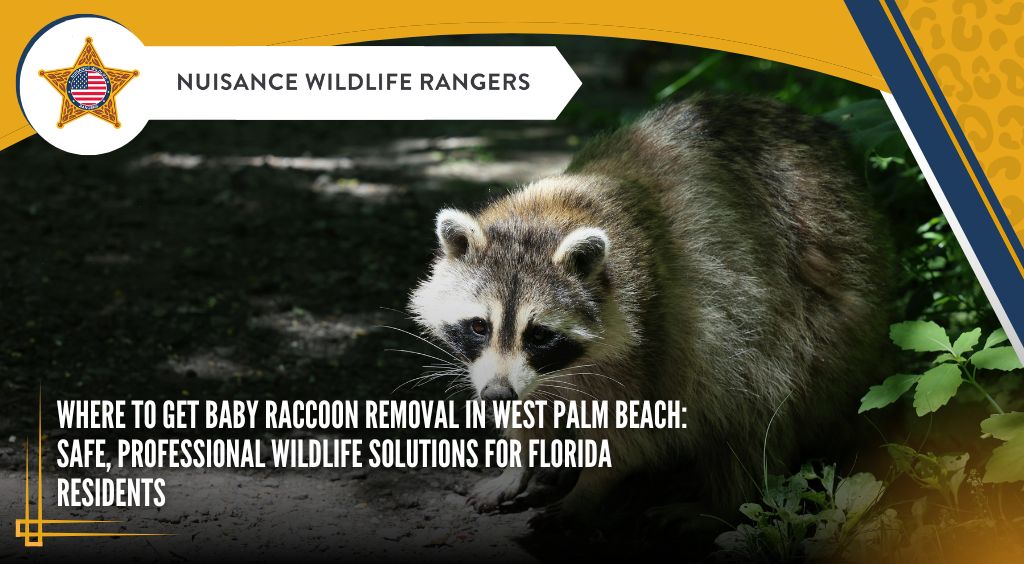
Raccoons are intelligent animals, capable of adapting quickly to urban environments like West Palm Beach and surrounding areas such as Palm Beach Gardens, Royal Palm Beach, Lake Worth, and Riviera Beach. While often perceived as cute and curious, baby raccoons (kits) can cause major damage if they take up residence in your attic, crawl space, or shed. The need for baby raccoon removal in West Palm Beach is more common than many residents realize, especially during Florida’s breeding seasons in spring and summer.
If you suspect you have a raccoon problem or have already spotted baby raccoons on your property, it’s critical to act fast. This guide explores the safest and most humane removal options available in the Palm Beach area, the dangers of DIY removal, and how to prevent future infestations.
Florida’s warm climate, abundance of trees, and easily accessible food sources (like pet food, trash, and bird seed) make it a hotspot for raccoons. According to the Florida Fish and Wildlife Conservation Commission (FWC), raccoons are considered a rabies vector species and should never be approached or handled by untrained individuals.[1]
The rise in urban development has displaced many wild animals, leading to more frequent interactions between humans and wildlife. As raccoons lose their natural habitats, they seek shelter in human dwellings—especially attics, garages, and chimneys.
Baby raccoons are usually born in spring (March to May) but can be found in Florida year-round due to the subtropical climate. Mothers often seek warm, safe places to raise their young—your attic or shed may be the perfect nursery from their perspective.
Removing baby raccoons requires special care:
It’s not just a nuisance—it’s a serious health risk.
Homeowners may be tempted by a “quick fix,” but attempting to trap or remove wild animals without professional help is risky and often illegal in Florida. Raccoons may appear docile, especially when young, but they can scratch, bite, and spread disease.
Key risks include:
Remember: raccoons can enter through small openings, climb tree limbs and electrical wires, and chew through roofing. DIY removal often fails to address wildlife issues at the source—leading to future infestations.
Hiring a fully licensed and insured pest control company is the best and safest way to deal with raccoon control. In the West Palm Beach, FL area, several reliable raccoon removal services specialize in animal trapping, wildlife exclusion, and full clean up of the contaminated areas.
What to look for in a baby raccoon removal specialist:
When dealing with nuisance wildlife such as baby raccoons in your home or attic, choosing the right removal service makes all the difference. Nuisance Wildlife Rangers is a trusted local option for professional and humane wildlife control services, especially for residents across Palm Beach County and South Florida.
Raccoons and other wildlife in Florida behave differently than in other states due to our warm climate and abundant food sources. A professional wildlife removal provider familiar with these conditions can better address wildlife issues effectively, ensuring raccoons and their young are removed safely and in compliance with local wildlife regulations.
Rather than using harsh or harmful methods, experienced wildlife experts focus on humane removal that minimizes risk to both animals and people. This approach is especially important when baby raccoons are present with their mother, as disturbing them improperly can lead to dangerous encounters or orphaned animals.
Nuisance Wildlife Rangers offer more than just raccoon removal. Our team is trained to handle common wildlife problems faced by Florida homeowners, including raccoon exclusion, inspection for entry points, and strategies to prevent future infestations. Addressing the full scope of the problem—beyond just trapping—helps protect your home against costly structural damage and recurring wildlife visits.
With a strong reputation in the region and experience working with Florida’s regulatory landscape, we can navigate local laws and best practices for wildlife control. Our expertise ensures not only the safety of your family and pets but also the legal and ethical treatment of the animals involved.
While the process can vary depending on certain factors like the size of the infestation, raccoon removal typically involves:
It’s common for homeowners experiencing raccoons to also deal with other wildlife, such as:
A quality pest control or wildlife control provider will be able to assist with removing wildlife, offer wildlife exclusion services, and prevent costly damage to your home.
Once the raccoons are gone, it’s essential to take proactive steps to ensure they don’t return. Here’s how:
If you find a baby raccoon on your property:
If the raccoon appears injured or sick, contact a free agency such as the local Florida Fish and Wildlife office or animal control. They are equipped to handle dangerous dogs and wildlife, and assist with pet adoptions and relocation when needed.
A baby raccoon might seem harmless, but the health risks, property damage, and potential for structural damage it brings are anything but minor. If you’re experiencing a raccoon situation in West Palm Beach, don’t wait for it to escalate into a full-blown infestation. Professional raccoon removal services in Palm Beach County offer safe, effective, and humane treatment for both homeowners and the wildlife involved.
When it comes to wildlife control services, taking early action is always the best solution. Protect your home, your family, and your pets by contacting Nuisance Wildlife Rangers today.
No, in most cases, it is not legal for unlicensed individuals to trap and relocate raccoons in Florida. According to the Florida Fish and Wildlife Conservation Commission (FWC), relocating raccoons can spread disease and disrupt ecosystems. Only licensed wildlife control professionals are permitted to handle and relocate raccoons under specific guidelines.
Raccoons in Florida are active year-round due to the mild climate, but baby raccoons are most commonly born between March and May. Increased sightings and attic invasions typically occur during spring and summer when mothers search for safe nesting sites.
Common signs include nocturnal noises, especially scratching or thumping, damaged vents or shingles, and foul odors from droppings or urine. A follow-up inspection from your wildlife control provider can confirm whether all animals were successfully excluded and if your wildlife exclusion measures are holding up.
Not safely. While raccoons may avoid confrontation, they can become aggressive if cornered or if babies are nearby. They may also spread parasites, raccoon roundworm, or the rabies virus to your domestic animals. Always keep pets indoors at night and secure pet food to avoid attracting raccoons.
Costs vary depending on factors like the number of raccoons, the location of the nest, and the extent of clean-up or exclusion work needed. In general, professional raccoon removal services in the West Palm Beach area can range from $250 to $600+, with additional fees for soiled insulation removal, repairs, or odor control.
Sometimes. Some policies cover structural damage caused by wild animals, while others exclude pests or wildlife. It’s best to check directly with your insurance provider. If coverage applies, your wildlife control company may be able to document the damage to support your claim.
References:
 Call Now
