
Welcome toNuisance Wildlife
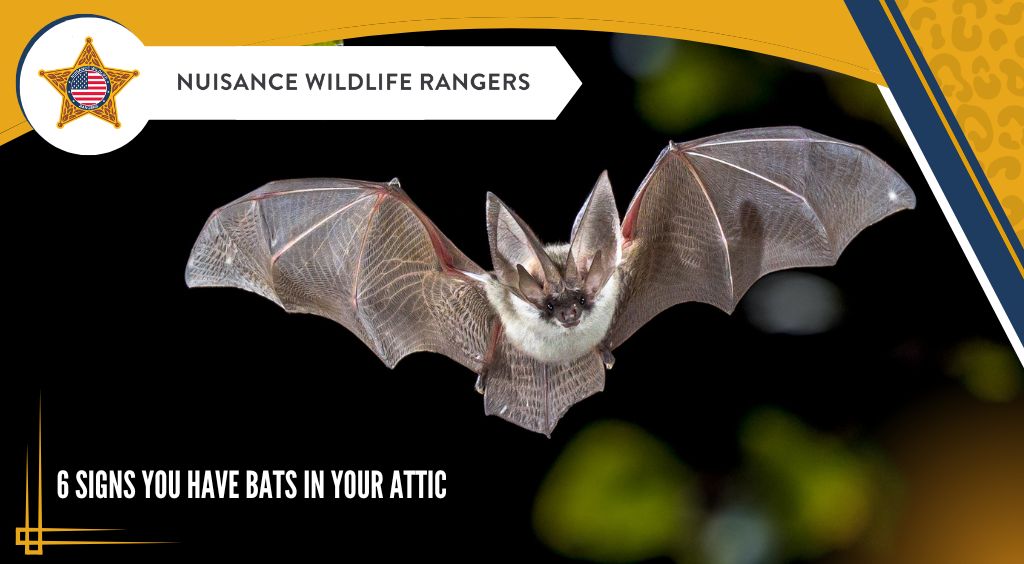
If you have noticed unusual noises overhead or have seen bats flying around your home at dusk, you may be dealing with bats in your attic. While bats play an important role in Florida’s ecosystem by eating thousands of insects each night, they do not belong inside your house.
This article will explore common signs of bats in your attic. If you believe you need help to remove bats from your home or property, you are not alone. Find professional wildlife removal services by contacting the expert team at Nuisance Wildlife Rangers now.
A bat infestation can lead to property damage, unpleasant odors, contaminated attic insulation, and potential health risks. The sooner you recognize the signs you have bats in your attic, the easier it is to schedule safe, legal, and effective bat removal before the colony grows.
Below are the six most common warning signs that many homeowners should never ignore.
One of the earliest signs of bats in the attic is hearing high-pitched squeaks or light scratching sounds above your ceiling.
Unlike rodents, attic bats are nocturnal animals. They spend the day sleeping in their roosting spots and become active shortly before sunset. If you regularly hear noises during the evening or just before sunrise, there’s a good chance you have bats living inside your attic spaces.
Listen for sounds coming from:
Because bats prefer quiet, dark spaces, your attic provides an ideal place for bat colonies to roost. If these noises become more frequent throughout the summer heat, your small problem may be turning into a much larger colony.
The second obvious sign of bats in the attic is discovering bat droppings, also called bat guano. Many people mistake guano for mouse droppings, but there are important differences.
Bat droppings usually:
Large amounts of droppings often indicate bats have been using the same roost for weeks or months. As bat guano accumulates, it can soak into attic insulation, increasing cleanup costs and producing a strong smell throughout the house.
When dried guano is disturbed, it may release fungal spores that can cause histoplasmosis, a respiratory illness. The Florida Fish and Wildlife Conservation Commission notes that, although no building-related cases have been reported in Florida, the CDC still recommends wearing respiratory protection when working around bat guano in enclosed spaces.
Perhaps the clearest of all the signs you have bats in your attic is watching your roofline around sunset. Stand outside just before dusk and observe your home.
If you notice bats emerge one after another from the same location, you likely have a colony inside.
Watch areas such as:
Because night bats leave to hunt insects shortly after sunset, this is the best time to identify active exit points. Seeing multiple visible bats leaving every evening usually means more than one bat is present. In many cases, homeowners discover entire bat colonies occupying their attic.
If you suspect bats, avoid immediately trying to block the openings. Closing the holes while bats are still inside can trap them in your attic or force them into your living space.
Another common warning sign that you have bats in your attic is a persistent musty odor. Over time, bat urine and bat guano soak into wood framing and insulation.
As waste builds up, homeowners often notice:
You may also notice dark grease marks around common entry points. These stains develop because bats repeatedly squeeze through the same small openings, leaving body oils behind.
These stains help wildlife professionals locate where bats enter and where they leave each evening. Ignoring these warning signs allows moisture and waste to continue damaging your home, increasing the cost of repairs and cleanup.
Finding visible bats inside your home should never be ignored. A bat flying through your hallway or bedroom often means there are bats in attic spaces above.
Sometimes a bat accidentally enters the home after becoming disoriented. Other times, a colony has expanded enough that bats begin exploring wall cavities and interior rooms.
If you discover a bat inside:
The CDC continues to recommend that any direct contact with a bat be evaluated because bats remain one of the primary known carriers of rabies in the United States. However, only a small percentage are infected. Never handle disturbing bats with your bare hands.
The final item on the list of signs you have bats in your attic is finding structural issues around your roof. Unlike rodents, bats do not chew new holes.
Instead, they exploit existing entry points, including:
Repeated use of these openings often leaves visible grease marks and staining.
Although bats cause less direct destruction than squirrels, accumulated waste creates significant damage caused by moisture, odors, and contaminated insulation. Professional inspections focus on locating every possible opening because bats can fit through surprisingly small openings.
Proper bat exclusion involves sealing every inactive opening with durable materials while leaving temporary one-way exits or one-way exclusion devices over active holes. These devices allow bats to leave naturally but prevent them from returning. This approach provides long-term protection while avoiding harm to Florida’s protected wildlife.
Professional wildlife removal is the most effective way to remove bats from your attic. Hiring a professional ensures safe, proper removal and a thorough assessment of any damage left behind.
However, many homeowners consider DIY bat removal. Attempting DIT removal often creates bigger problems.
Common DIY methods include:
Unfortunately, none of these methods reliably removes bats. Worse, sealing entry points before all bats have exited can trap them inside the home.
Florida law also protects most bat species, making it illegal to intentionally kill or harm them. Wildlife experts recommend bat exclusion rather than trapping or poisoning. During maternity season, exclusion may need to be delayed because flightless pups cannot leave with the adults.
Professional bat removal focuses on allowing bats to exit safely while preventing future access.
Living with bats in your attic is more than an inconvenience. These flying creatures can carry disease and other health risks, putting you and your family at risk.
Potential health risks include:
People with weakened immune systems are generally at greater risk of developing complications from respiratory infections. Anyone experiencing persistent coughing, fever, difficulty breathing, or chest pain after significant exposure to contaminated dust should seek medical attention promptly.
Although histoplasmosis associated with residential bat guano is considered uncommon in Florida, precautions are still recommended whenever cleaning contaminated attic areas. Hiring a professional nuisance wildlife removal service is the best way to identify and eliminate bats and their potential health risks.
Bats typically return to the same sites over and over again unless steps are taken to prevent reinfestation. Once professionals complete effective bat removal, prevention becomes the priority.
The best ways to prevent bats include:
A properly installed bat house gives bats an alternative roost while helping protect your home from future infestations.
Recognizing the signs you have bats in your attic early can save thousands of dollars in cleanup and repairs. Whether you notice bat activity, hear high-pitched squeaks, discover bat droppings, or watch bats flying from your roof each evening, acting quickly is the best way to protect your property.
Because bats are a protected species in Florida, professional bat removal using humane bat exclusion methods is the safest and most effective solution. Rather than attempting risky DIY bat removal, schedule an inspection to locate all entry and exit points, safely remove bats, and prevent their return.
If you suspect your attic is infested with bats, it’s essential to hire a professional removal team. Find fast, professional removal services by contacting the team at Nuisance Wildlife Rangers. Contact us now to explore our services or schedule a removal assessment.
The timeline depends on the size of the colony, the number of entry points, and the time of year. In many cases, the exclusion process takes several days to a few weeks because bats must be allowed to leave the attic naturally before all openings can be permanently sealed.
They can if your home is not properly sealed. Bats have strong homing instincts and may return to familiar roosting sites. A professional exclusion service identifies and seals all potential entry points to help prevent future infestations.
Coverage varies by insurance provider and policy. Some policies may cover certain types of damage caused by bats, while others exclude damage related to wildlife infestations. Contact your insurance company to review your coverage before filing a claim.
Yes. Bats are an important part of Florida’s ecosystem because they feed on insects, including mosquitoes and agricultural pests. The goal of professional bat removal is not to harm the bats but to safely relocate them outside your home while protecting both the animals and your property.
The ideal timing depends on the species and local regulations. Wildlife professionals often schedule exclusions outside of maternity season to avoid separating mothers from flightless young. An inspection can determine when removal can be completed safely and legally for your specific situation.
 Call Now
