
Welcome toNuisance Wildlife
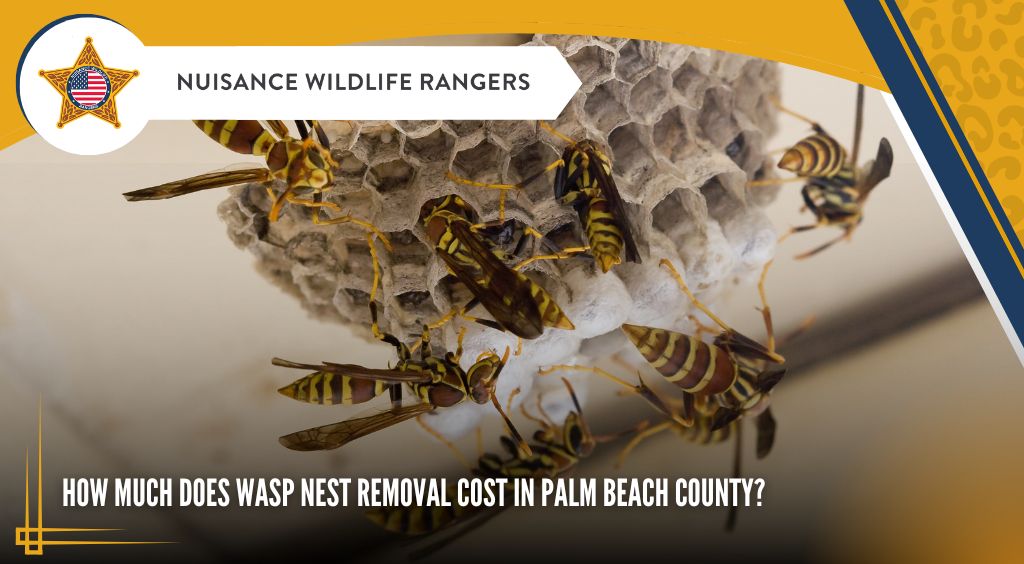
If you’ve discovered a wasp nest around your home, your first question is usually straightforward: how much does wasp nest removal cost? In Palm Beach County, the answer depends on several practical factors—nest size, nest location, wasp species, and how difficult the removal process will be.
This guide breaks down real pricing, what influences wasp removal costs, and how to handle a wasp infestation safely in South Florida’s climate.
In Palm Beach County, homeowners typically pay:
For basic jobs—like removing small paper wasp nests from porch ceilings—you’ll likely stay on the lower end. But if you’re dealing with a yellow jacket nest underground or bald-faced hornets in tree canopies, expect higher wasp exterminator costs.
Wasp removal isn’t one-size-fits-all. Several key factors influence the removal cost.
A small hive or new nest is quick to handle. Larger nests take more time, more pesticide, and more caution. For example:
Large colonies mean more wasps, which increases the chance of painful stings and allergic reactions.
Where the nest sits is one of the biggest drivers of nest removal costs:
Removing wasps from underground nests or inside walls often requires specialized equipment and more time, increasing wasp control costs.
Different wasp species behave differently, and that affects pricing.
Common Florida species include:
The University of Florida IFAS Extension notes that yellow jackets and hornet species are responsible for most serious wasp stings due to their aggressive behavior.[1]
More aggressive wasp species require a professional exterminator with protective gear, which increases costs.
A single nest is manageable. Multiple nests or recurring activity signal a larger wasp infestation.
One nest is going to be a low or standard cost, while multiple or recurring nests may require more treatments. In other words, the more wasps you are dealing with, the higher the cost will be.
If wasps return or build nests repeatedly, an animal removal company may recommend ongoing wasp control services.
Different situations require different removal methods; for example, the following removal methods may be used:
More complex methods raise wasp removal costs because they involve additional safety measures and time.
Understanding how services are priced can help you estimate your situation more accurately.
This includes removing visible nests in accessible areas. It typically costs between $100–$250.
Typically applies to paper wasp nests on porch ceilings or a tree branch.
These involve aggressive stinging insects and often require more caution. This can cost anywhere from $200 to $500 and more.
Hornet removal and yellow jacket jobs cost more due to risk and complexity.
When wasps nest underground, the removal process is more involved. The cost can range from $300–$600+ because these jobs require specialized equipment and careful pesticide application.
If your property has multiple nests or recurring problems, the cost can range from $500–$1,000 and more.
This may include inspection, removal, sealing entry points, and preventative treatments.
Many homeowners try to save money by removing wasps themselves. While it’s tempting, DIY methods come with real risks.
Common DIY approaches include:
While these may help deter wasps, they are not always effective removal solutions—especially for larger nests.
The risks of trying to remove wasps by yourself include:
The Centers for Disease Control and Prevention reports that stinging insects cause thousands of emergency visits annually, with allergic reactions being a major concern.[2]
Without protective clothing and proper technique, removing wasps can quickly become dangerous.
A professional wasp removal company brings expertise, safety, and long-term results.
Benefits of professional wasp removal services include:
A local animal removal company like Nuisance Wildlife Rangers also understands Florida-specific wasp species and seasonal patterns.
Wasp nest removal isn’t always the only expense.
If wasps have damaged siding, roofing, or walls, you may need repairs afterward.
To deter wasps from building nests again:
These preventative treatments can add to the total removal cost but help save money long term.
Wasp activity in South Florida peaks during warmer months. For example:
Because most wasps build nests early in the year, removing a small hive in spring is usually cheaper than dealing with larger nests later.
If you want to keep wasp exterminator costs down, timing and prevention matter.
Removing a new nest is always cheaper than dealing with a full wasp infestation.
You should:
To prevent wasps:
Working with an animal removal company for regular inspections can prevent major infestations.
Old nests—those no longer active—are generally safe to remove.
However, you need to:
Even then, removing wasps from an active nest is very different and should be handled by pest control specialists.
It’s important to distinguish between wasps and bees:
If you’re dealing with bees, many companies offer humane bee removal rather than extermination.
If you notice any of the following, it’s time to contact a professional exterminator:
Trying to kill wasps without the right tools or experience often leads to more problems—and higher costs later.
Wasp removal in Palm Beach County is a common but sometimes urgent need. While small jobs are affordable, complex infestations can become costly and dangerous quickly.
A professional wasp exterminator ensures effective removal, reduces the risk of painful stings, and helps prevent future nests from forming. In most cases, that expertise is well worth the investment.
Contact Nuisance Wildlife Rangers for more information on how we can help you remove wasps and their nests from your property.
Most standard wasp nest removal jobs take between 30 minutes and a few hours, depending on the nest location and activity level. However, more complex cases—such as underground nests or nests inside walls—may require multiple visits to fully eliminate the colony and ensure effective removal.
In many cases, wasps do not reuse old nests. However, new nests can be built nearby if the conditions are favorable. If entry points, food sources, or sheltered areas like porch ceilings and tree canopies remain accessible, wasps may return. Preventative treatments and regular inspections help reduce the chances of future nesting.
Most homeowners’ insurance policies do not cover wasp removal costs because it is considered routine maintenance. However, if a wasp infestation causes structural damage—such as damage inside walls or roofing—some repair costs may be partially covered. It’s best to check directly with your insurance provider.
Wasp removal is typically safest and most effective in the early morning or late evening. During these times, most wasps are inside the nest and less active, which reduces the risk of agitation and makes the removal process more controlled.
A professional animal removal company uses targeted treatment methods based on the wasp type and nest structure. This may include applying residual pesticides, treating hidden areas, and monitoring activity after the initial removal. Follow-up inspections are sometimes recommended to confirm the colony has been eliminated.
Yes, some animal removal specialists offer eco-conscious wasp control solutions. These may include low-toxicity treatments, exclusion techniques, and habitat modification to deter wasps from building nests. While these methods can be effective, they are usually best suited for less aggressive species or early-stage infestations.
References:
 Call Now
