
Welcome toNuisance Wildlife
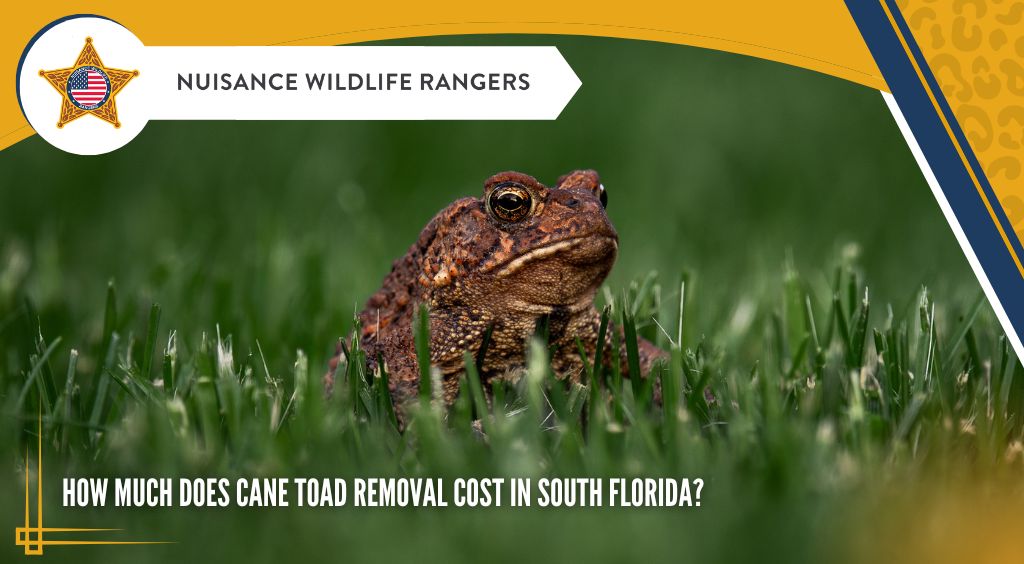
Cane toads are a growing problem across South Florida and Palm Beach County. Also known as bufo toads, marine toads, or Rhinella marina, these invasive species threaten pets, native species, and the local ecosystem. For many homeowners, the biggest concern is protecting dogs and cats from the potent toxin released by these poisonous amphibians.
If you have seen cane toads in your yard, near your house, or around outdoor lighting at night, you may already be thinking about professional cane toad removal. One of the first questions most people ask is simple: how much does cane toad removal cost in South Florida?
The answer depends on several factors, including the size of your property, the number of toads present, breeding activity, and whether you need ongoing control services. This guide explains the average cost of cane toad removal, what affects pricing, and why hiring an experienced team is often the safest option.
Cane toads (Rhinella marina) are large invasive amphibians originally introduced to Florida to control pests in sugar cane fields during the 1930s and 1940s. Today, they are widespread throughout South Florida and continue spreading north.[1]
These toads are dangerous because they produce a potent toxin from glands located behind the head. The toxin can poison animals, particularly dogs and cats, if the toad is bitten, licked, or ingested.
According to the Florida Fish and Wildlife Conservation Commission, pets can become seriously ill or die in as little as 15 minutes after exposure to cane toad toxin.[1]
Because of the risk to pets, many Florida homeowners seek cane toad removal services as soon as they notice activity around their property.
The cost of cane toad removal in South Florida typically ranges from $150 to $1,000 or more, depending on the scope of the problem.
Here is a general breakdown of pricing:
Professional cane toad removal companies usually inspect the property first before giving an estimate. Pricing often depends on how many toads are present and whether eggs or tadpoles are found in ponds, water features, or breeding habitats.
If cane toads return frequently, some companies recommend recurring toad removal services year-round.
Several factors influence the total cost of removal.
A larger yard takes more time to inspect and treat. Homes with extensive landscaping, dense shrubs, water features, or hiding places often require more labor.
Cane toads commonly hide at ground level during the day under:
The more potential habitats on your property, the more involved the process becomes.
A single encounter may require only a basic service call. However, if there is an abundance of toads breeding around your home, costs increase because technicians must remove multiple adult toads, eggs, and tadpoles.
Female cane toads can lay thousands of eggs at one time, making breeding control extremely important.
South Florida’s warm and humid environment allows cane toads to breed much of the year, especially during rainy months.
After heavy rain, homeowners may suddenly see dozens of toads in one night. If breeding is active, removal companies may need repeated visits to control the population.
Cane toads are most active at dusk and during the evening. Many professional cane toad removal services in Palm Beach County perform inspections after dark because that is when the toads leave hiding spots to search for food.
Nighttime wildlife removal may cost more due to scheduling and labor requirements.
Some companies in Florida offer long-term prevention strategies to deter cane toads from returning.
These may include:
While preventative control adds to the upfront cost, it may reduce future removal expenses.
Some homeowners try to handle cane toad removal on their own. However, professional cane toad removal is usually safer and more effective.
Florida has several native species of toads that are harmless and beneficial to the environment. Mistaken identification can harm native wildlife and damage conservation efforts.
Professional wildlife removal specialists in Palm Beach County know how to identify invasive cane toads correctly.
Florida allows cane toads to be removed from private property year-round, but humane practices are still required.[1]
An experienced team understands the legal and humane process for handling these invasive species.
The biggest reason homeowners hire professional cane toad removal services is to protect pets.
Dogs are particularly vulnerable because they often chase, lick, or bite toads. Even brief contact with a pet’s mouth can expose the animal to a lethal toxin.
Symptoms of poisoning may include:
Without fast treatment, exposure can lead to death.
If your dog encounters a cane toad, experts recommend immediately rinsing the pet’s mouth with water while keeping the head pointed downward to prevent swallowing toxins. Veterinary treatment should follow immediately.
Professional removal is important, but prevention also matters. Homeowners in Palm Beach County can reduce the chances of future encounters by making the property less attractive to toads.
Cane toads feed on insects, pet food, and small animals.
To reduce attraction:
The Florida Fish and Wildlife Conservation Commission specifically warns against leaving pet food outdoors because it attracts cane toads and other wildlife.[1]
Bright outdoor lighting attracts insects, which attract toads looking for food.
Switching to lower-intensity lighting or motion-activated fixtures may help deter cane toads.
Cane toads seek cool, damp hiding spots during the day.
Reduce shelter opportunities by:
Ponds, birdbaths, and drainage areas can become breeding habitats for eggs and tadpoles.
Limiting water access may reduce breeding activity.
Cane toads are more than just a nuisance. They affect wildlife, pets, and the environment throughout South Florida.
The species competes with native species for food and habitat while poisoning predators that attempt to eat them.
Their spread in Florida and around Palm Beach County mirrors the ecological damage seen in Australia, where cane toads became one of the country’s most destructive invasive animals.
According to the University of Florida and Florida wildlife officials, cane toads are now firmly established throughout much of South and Central Florida.[2]
For homeowners, this means ongoing vigilance is necessary, especially during warm and rainy seasons.
You may need professional toad removal if you notice:
The sooner you address the problem, the easier it usually is to control.
Not all wildlife removal companies specialize in cane toads. When comparing services in South Florida, ask about:
An experienced team should understand how cane toads behave, where they hide, and how to reduce future breeding activity.
The cost of cane toad removal in South Florida varies based on property size, infestation level, and prevention needs. Most homeowners can expect to spend between $150 and $1,000, depending on the severity of the issue.
While DIY removal may seem cheaper, professional cane toad removal offers safer handling, better long-term control, and greater protection for pets and native wildlife.
Because cane toads are a poisonous invasive species capable of causing lethal poisoning in dogs and cats, fast action is important. If you notice these toads around your home, yard, or outdoor living spaces, scheduling professional removal services can help protect your property, your animals, and the local ecosystem.
Contact Nuisance Wildlife Rangers today to learn more about our cane toad removal services in Palm Beach County.
Yes. Because South Florida has a warm climate year-round, cane toads can remain active in every season. Activity usually increases during rainy months and humid evenings, especially at dusk and throughout the night.
Cane toads are not strong climbers like some frogs, but they can squeeze through small gaps and enter yards through openings near ground level. They often move between properties while searching for food, water, and breeding habitat.
They can. Even after successful cane toad removal, nearby populations may continue moving into the area. That is why many homeowners choose ongoing cane toad removal services and prevention strategies to help control future activity.
Cane toads are attracted to moisture, insects, pet food, standing water, and shelter. Properties with outdoor lighting, overgrown landscaping, ponds, and easily accessible food sources are more likely to experience repeated encounters.
Cane toads are generally not aggressive toward humans, but their toxin can still irritate if touched. People should avoid handling these poisonous amphibians with their bare hands and should wash thoroughly after accidental contact with the glands or toxin.
Immediately. A dog or cat exposed to cane toad toxin can develop symptoms within minutes. Fast action is critical because severe poisoning may lead to seizures, breathing problems, or death. Homeowners should rinse the pet’s mouth with water and contact a veterinarian right away.
References:
 Call Now
