
Welcome toNuisance Wildlife
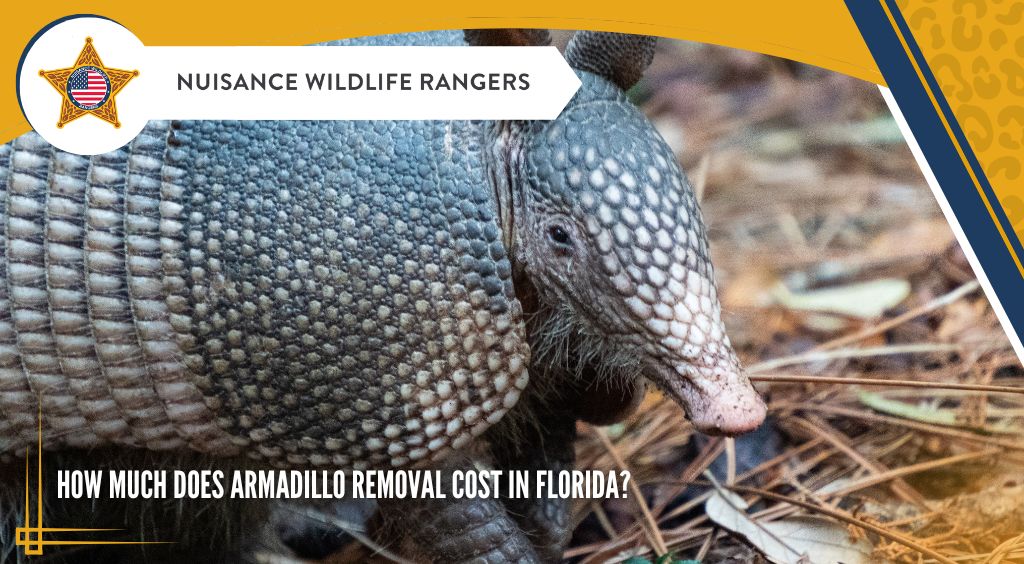
Armadillos may look harmless, but they can cause significant property damage in Florida. A single armadillo can dig multiple burrows beneath sheds, decks, driveways, and even a home’s foundation. Their constant digging for insects leaves behind loose soil, uprooted plants, and uneven ground, creating safety hazards for people and pets.
If you’re dealing with an armadillo problem, one of your first questions is probably, “How much does armadillo removal cost in Florida?” The answer depends on several factors, including the removal method, the number of animals, labor costs, and whether repairs or exclusion barriers are needed afterward.
This guide explains the cost of armadillo removal, the factors that affect pricing, and why hiring a professional wildlife removal service is often the safest and most effective option. Find professional wildlife removal services by contacting Nuisance Wildlife Rangers.
The cost of wildlife removal for armadillos in Florida typically ranges from $250 to $800 for a standard job. However, larger infestations or properties requiring multiple visits can cost $1,000 or more.
Several factors influence the total cost, including:
While some homeowners hope to save money with DIY solutions, improper trapping or handling often results in additional property damage and recurring problems.
No two wildlife removal jobs are exactly alike. Professional animal removal companies evaluate several factors before providing an estimate. Here are some of the factors they will consider when making an estimate.
Removing a single armadillo is usually straightforward. However, if several animals are using the same yard or multiple burrows exist, additional trapping equipment, labor, and multiple visits may be required. The presence of a nine-banded armadillo family can significantly increase the overall removal cost.
Larger properties require more time for a detailed inspection. Wildlife professionals must locate burrows, identify travel paths, inspect access points, and determine where animals are entering the property. Properties measured by the square foot, or those with large landscaped areas, generally require more labor.
The more damage the armadillos have caused, the more expensive the project becomes.
Common forms of armadillo damage include:
These issues often require repairs after the wildlife removal process is complete.
Different situations require different removal methods.
Professionals may use:
The safest removal method depends on the property’s layout and the animals’ behavior.
Labor costs account for much of the overall cost of wildlife removal.
Professionals spend time performing:
Properties with difficult terrain or limited access often require additional labor.
Many homeowners attempt to rid their property of armadillos themselves. Unfortunately, DIY efforts often fail because armadillos are nocturnal and surprisingly difficult to trap without experience.
Common mistakes include:
When the original problem isn’t solved, homeowners often end up paying for professional help after the damage worsens.
A quality wildlife removal service typically includes far more than simply trapping an animal. Here is an overview of what may be included in wildlife removal services.
Many Florida companies offer a free inspection or low-cost property evaluation.
During the inspection, technicians look for:
Professional companies prioritize humane removal whenever possible. Live traps are commonly used to capture armadillos safely while minimizing stress to the animal. Florida regulations may affect what happens after capture, so licensed professionals follow current state requirements.
One of the most important long-term solutions is installing exclusion barriers. A properly installed metal mesh fence extending below ground helps prevent armadillos from returning. Because armadillos are excellent diggers, barriers typically need to extend several inches underground. Exclusion barriers also help prevent wildlife from establishing permanent burrows.
If armadillos are accessing crawl spaces or areas beneath structures, technicians will seal entry points after confirming no animals remain inside. Without sealing entry points, new animals can quickly move into abandoned burrows.
The initial removal service may not be the only expense. Here are some of the potential additional costs associated with wildlife removal.
Armadillos searching for insects often destroy flower beds, lawns, and gardens. Repairing uprooted plants and damaged landscaping can become expensive after weeks or months of digging.
Although uncommon, extensive tunnels beneath a home’s foundation can contribute to settling problems over time. If left untreated for at least a year, repeated burrowing may increase the risk of cracked foundations or weakened support around patios and sidewalks.
Occasionally, homeowners discover a dead animal beneath a deck or crawl space. Dead animal removal is typically priced separately because it requires locating the carcass, safely removing it, controlling odor, and ensuring sanitation.
Some wildlife removal companies also offer related services, including:
Bundling services may reduce overall costs when multiple wildlife issues are present.
Armadillos generally avoid humans and rarely become aggressive. However, they can still create risks. Deep holes increase the likelihood of trips and falls, while burrows beneath driveways or walkways may weaken the ground over time.
There is also a small health concern associated with armadillos. According to the U.S. Centers for Disease Control and Prevention (CDC), some wild armadillos can naturally carry the bacteria associated with Hansen’s disease (leprosy). Human infections are uncommon, but avoiding direct contact with wild armadillos is recommended. For this reason, professional animal handling is always the safest option.
Florida has regulations governing wildlife removal. While the nine-banded armadillo is not considered a protected species in Florida, wildlife professionals must still follow state rules regarding capture, transport, and disposal.
Attempting lethal methods without understanding state regulations may result in legal issues and often fail to solve the underlying problem if other armadillos move into the same habitat. Licensed professionals stay current with Florida wildlife laws and use legal, effective armadillo removal techniques.
Traditional pest control companies typically focus on insects rather than larger wildlife. Although some pest control providers offer wildlife removal or animal control services, many homeowners need a licensed wildlife removal specialist experienced with armadillo trapping and exclusion work.
Unlike insects, armadillos require specialized trapping techniques and long-term prevention strategies.
Armadillos can cause significant damage to your home and property. While removal of the invading animals is a critical first step, it is only part of the solution.
To prevent future infestations:
Preventive work is often much less expensive than repairing costly damage later.
Some people may be tempted to try removing wildlife from their property on their own. However, DIY removals can result in bites, harm to the animal, more damage to your property, and other unintended consequences.
Quick removal of nuisance wildlife can reduce the risk of more serious damage. It’s best to contact a wildlife removal company if you notice:
Early intervention helps protect your property and usually reduces the total cost of removal.
The cost of armadillo removal in Florida depends on several factors, including the number of animals, the amount of property damage, the removal method used, labor costs, and whether exclusion barriers are installed afterward. While most homeowners spend between $250 and $800 for professional wildlife removal, larger or more complex situations can exceed $1,000.
Professional wildlife removal provides more than simply trapping an armadillo. A reputable company performs a detailed inspection, identifies entry points, uses humane removal methods, installs exclusion barriers when needed, and helps prevent future infestations. Addressing the problem early not only protects your yard and home’s foundation but can also save money by avoiding costly repairs caused by extensive digging and recurring wildlife activity.
If you need professional wildlife removal services, contact the professionals at Nuisance Wildlife Rangers now. Learn about our services or schedule a removal by reaching out today.
Most single-armadillo removal jobs are completed within a few days, but the timeline depends on the animal’s activity and the removal method being used. If trapping is necessary or multiple burrows are present, the process may take one to two weeks. Some properties also require follow-up visits to ensure the armadillo has not returned.
They can if the conditions that attracted them remain. Armadillos are drawn to yards with abundant insects, loose soil, and suitable places to dig. Removing the animal is only one part of the solution. Addressing attractants and making the property less inviting greatly reduces the chances of another armadillo moving in.
In most cases, homeowners’ insurance does not cover damage caused by wildlife, including armadillos. Standard policies typically exclude damage resulting from pests or wild animals. However, coverage varies by insurer and policy, so it’s worth reviewing your policy or contacting your insurance provider to confirm what is included.
Armadillos are active year-round in Florida because of the state’s mild climate. However, homeowners often notice increased digging during the warmer months when insects are more abundant and after periods of rain, when soft ground makes burrowing easier.
Yes. While searching for food or creating burrows, armadillos can accidentally damage irrigation lines, landscape lighting cables, and other shallow underground utilities. Although they rarely dig deep enough to affect major utility lines, repairing damaged sprinkler systems and underground wiring can become an unexpected expense if the problem is left unchecked.
Although armadillos are primarily nocturnal, it is not unusual to see one during daylight hours, especially while foraging after rain or during cooler weather. Avoid approaching or attempting to handle the animal. Instead, observe it from a distance and contact a professional wildlife removal company if it appears to be causing property damage or repeatedly visiting your yard.
 Call Now
