
Welcome toNuisance Wildlife
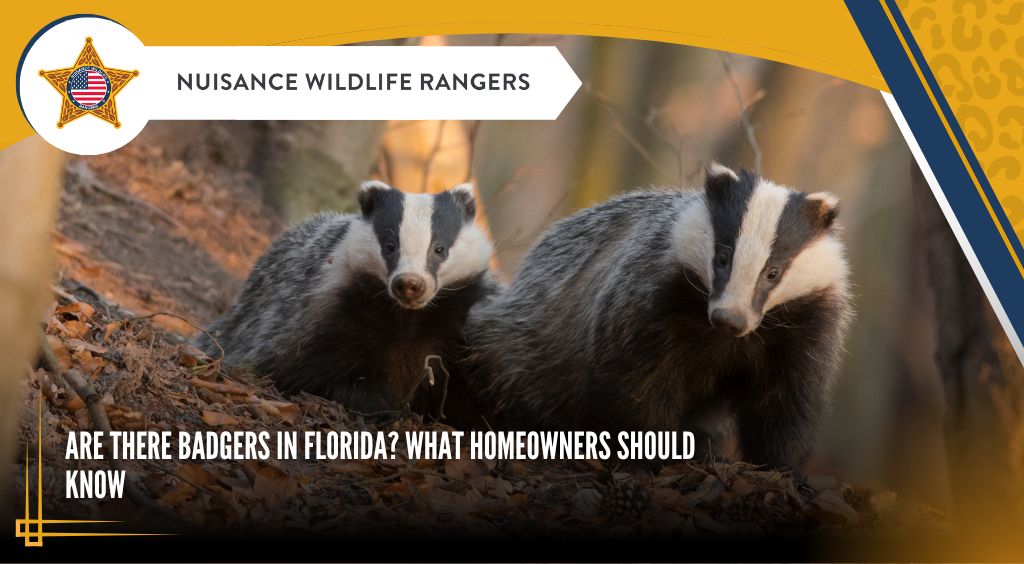
If you’re a Florida homeowner concerned about wildlife on your property, you may be wondering: Are there badgers in Florida? The short answer is no, badgers are not native to Florida. However, that doesn’t mean Florida homeowners are free from similar wildlife nuisances.
In this guide, we’ll explore why badgers don’t live in Florida, what similar animals do pose a threat to your property, and what you should do if you suspect burrowing wildlife in your yard.
Badgers are medium-sized mammals known for their muscular necks, powerful digging claws, and distinctive black and white facial markings. They belong to the Mustelidae family, which also includes weasels, skunks, and ferrets.
There are several species of badgers around the world:
Most badgers are solitary animals, spending their time in underground dens and emerging mainly at night to hunt small prey like insects, rodents, reptiles, and rabbits. Badgers are carnivorous, but their diet can vary depending on food sources and habitat.
No, badgers do not live in Florida. The American badger, the only species native to the U.S., is typically found in the western and central parts of North America—especially in grasslands, prairies, and open plains. Its range extends as far south as parts of Texas and northern Mexico, but it does not include Florida.
There is no evidence of wild or introduced badger populations in the Sunshine State. However, there are some animals in Florida that might be mistaken for badgers.
Even though badgers aren’t in Florida, some other species can cause similar property damage and may be mistaken for badgers because of their burrowing behavior or appearance.
Here are the most common:
The nine-banded armadillo is a common Florida nuisance. Like badgers, they dig burrows and forage for insects at night. Homeowners often find holes in lawns caused by armadillos looking for food.
Raccoons don’t dig burrows like badgers, but they are nocturnal and can damage property while searching for food or shelter.
These predators may dig small dens and can pose a threat to domestic animals and pets. Because of their digging, you might find holes and incorrectly assume you are dealing with badgers.
These small mammals dig burrows and tunnels that can lead to soil erosion and property damage. Skunks, like badgers, are also part of the weasel family.
Misidentifying a badger problem could lead to the wrong removal strategy. For example, while you won’t need badger removal services in Florida, you might need wildlife removal for raccoons, armadillos, or other pests.
Wild animals can:
Additionally, if you are calling a wildlife control company, you want to be able to tell them what animal you are dealing with. The process of removing animals varies greatly depending on their species.
Though badgers aren’t a concern in Florida, it’s worth knowing what their burrows would look like—just in case you’re comparing signs of animal activity on your property.
Badger burrows are typically:
Other burrowing animals like gophers or armadillos may leave similar signs, but the size, shape, and dirt displacement can differ.
If you’re seeing holes in your yard, damaged landscaping, or signs of animal digging, here’s what to do:
While trapping might seem like a quick fix, it’s often illegal to trap or relocate wildlife in Florida without a permit. Improper removal can harm the animal—and you.
One of the most effective prevention methods is exclusion fencing. This type of barrier is buried several inches underground to prevent animals from digging their way in.
Animals are drawn to food sources, such as pet food, garbage, or compost. Keeping your property clean and sealed helps get rid of pests naturally.
Nocturnal animals often shy away from bright lights or motion-activated sound deterrents. These methods can discourage wildlife from settling on your property.
A licensed wildlife removal expert will identify the animal and remove it safely. They can also seal entry points and advise you on long-term prevention strategies.
Florida is home to many species of native wildlife, and urban development continues to shrink their natural habitats. This leads to more frequent encounters between humans and animals.
When you have wild animals on your property, they can damage property, spread disease, disrupt gardens, and put your pets or children at risk. Trying to deal with animal removal yourself can be dangerous, which is why professional wildlife removal is so important. This is especially true in Florida, as the state has tons of different species of animals living among humans.
You might’ve heard of the honey badger—infamous for its aggressive behavior and internet fame. However, honey badgers (Mellivora capensis) are native to Africa and parts of Asia, not the United States. There have been no verified sightings of honey badgers in Florida, in the wild or in captivity.
Prairie dogs, while related to ground squirrels, are not found in Florida either. They live in large colonies in the Great Plains region and are more social than solitary animals like badgers. However, other Florida-native rodents like gophers and squirrels can cause similar digging damage.
While there aren’t badgers in Florida, several other species cause the same problems as these animals. For example, armadillos, skunks, and gophers can damage your property in a similar manner as badgers.
Protecting your property, pets, and native wildlife starts with being informed. While you may not need to remove badgers, understanding what other animals are active in Florida—and what steps to take—will help you maintain a safe and pest-free home.
Contact Nuisance Wildlife Rangers today to learn more about how we can help you prevent property damage, trap and remove animals, and keep your home safe from further infestations.
Badgers are well-known across North America, especially in northern and western states like Wisconsin (nicknamed the “Badger State”). Their reputation as fierce diggers and hunters has made them memorable, and some Florida residents may assume they live here, especially if they notice similar digging behavior from animals like armadillos or gophers. In reality, Florida has no native or introduced badger populations.
It’s extremely unlikely. Even if someone illegally kept a badger or honey badger as an exotic pet and it escaped, Florida’s humid, subtropical climate is not suitable for their survival. These animals require specific habitats and food sources found in cooler or drier regions, and no verified wild sightings have occurred in Florida.
Gopher tortoises, which are a protected species in Florida, dig wide, smooth-sided burrows that can extend over 30 feet underground. In contrast, mammal burrows—like those from armadillos or rodents—are typically smaller, messier, and may have visible claw marks or dirt piles around the entrance. Disturbing a gopher tortoise burrow can lead to legal penalties, so it’s important to properly identify it before taking action.
Look for fresh soil, tracks, or scat around the hole. Re-plugging the hole lightly with loose dirt and checking if it gets reopened within 24–48 hours is another method. Active animals will usually re-dig quickly. Wildlife professionals often use trail cameras to confirm species and activity levels.
Yes. Coyotes, foxes, snakes, and birds of prey help manage populations of rodents, rabbits, and other small burrowing animals. However, in suburban or urban areas, these predators may be scarce, allowing pest species to flourish without natural checks.
Absolutely. Burrowing animals can damage sprinkler lines, drainage pipes, and foundation supports. Their tunnels can also lead to soil instability or minor sinkholes in certain areas. If you suspect wildlife is causing such damage, it’s best to consult both a wildlife control expert and a property maintenance specialist.
 Call Now
