
Welcome toNuisance Wildlife
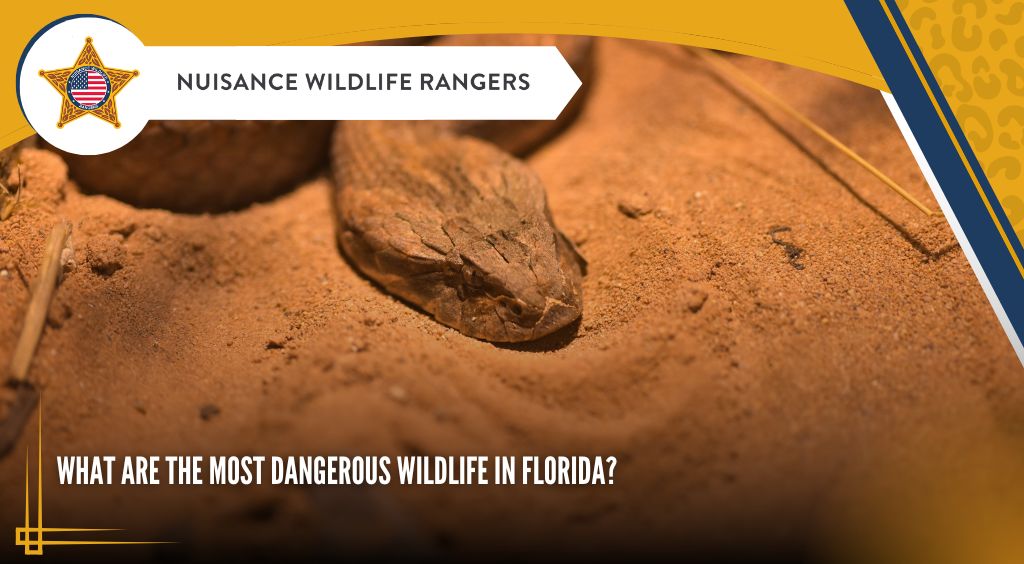
Florida’s natural beauty is one of its biggest draws, but the same ecosystems that make the Sunshine State so appealing also support a wide range of dangerous wildlife. From venomous snakes and invasive species to dangerous marine animals and disease-carrying insects, residents and visitors alike need to understand the risks—especially if wildlife is encroaching on their property.
This guide breaks down the most dangerous animals in Florida, the risks they pose, and when it’s time to seek professional wildlife removal.
Florida’s warm climate, wetlands, and access to both freshwater and saltwater create ideal conditions for a diverse ecosystem. Areas like Everglades National Park and South Florida are especially dense with wildlife, including apex predators and invasive species.
According to the Florida Fish and Wildlife Conservation Commission (FWC), the state is home to more than 700 terrestrial animals and over 1,000 marine species.[1] Many are harmless—but some are potentially dangerous or even life-threatening.
The American alligator is one of the most recognizable and most dangerous wildlife species in Florida. These apex predators are commonly found in lakes, ponds, canals, and even residential neighborhoods.
Florida averages about 8 unprovoked alligator attacks per year, according to FWC.[2] Since 1948, there have been over 450 documented alligator attacks, with around 30 fatalities.
Most alligator attacks occur when humans swim in freshwater or approach nesting areas. These animals can be extremely aggressive when defending territory.
Key risks associated with alligators include:
Florida has six species of venomous snakes, making snake encounters a serious concern.
The eastern diamondback rattlesnake is the largest venomous snake in North America. Its dark brown body with diamond patterns makes it easy to identify.
Facts about this snake include:
Recognizable by its red, yellow, and black bands, the eastern coral snake has highly potent venom.
Eastern coral snake bites are rare but extremely dangerous. Their venom affects breathing and the nervous system.
Commonly found near water, the cottonmouth snake is known for its defensive behavior.
Often stands its ground rather than fleeing, which means bites are more common. Their bite can cause severe pain and tissue damage.
Smaller but still dangerous, these snakes deliver painful bites that require immediate medical attention.
According to the Florida Department of Health, there are approximately 7,000–8,000 venomous snake bites annually in the U.S., though fatalities are rare due to modern treatment.[3]
Florida leads the world in shark encounters, particularly along the Atlantic coast.
In 2023, Florida recorded 16 unprovoked shark attacks, according to the International Shark Attack File (ISAF).[4] Volusia County is often called the “shark bite capital of the world.”
Common dangerous shark species include:
While most shark bites are not fatal, multiple shark bites can occur in feeding frenzies, and injuries can still be severe.
Important note: Most shark attacks are cases of mistaken identity in shallow water.
Florida’s waters are home to several dangerous marine animals capable of delivering a painful sting or worse.
One of the world’s deadliest animals, the box jellyfish can deliver venom through its tentacles. Their sting causes intense pain and can affect the heart and nervous system.
Many jellyfish species in Florida can cause:
Originally from South America, invasive lionfish have spread throughout Florida’s waters. Lionfish can cause:
These species are commonly found in shallow water, increasing the likelihood of human contact.
Mosquitoes are often overlooked, but they are considered the world’s deadliest animal due to disease transmission.
In Florida, mosquitoes can carry:
According to the Centers for Disease Control and Prevention (CDC), West Nile virus is the most common mosquito-borne disease in the U.S., with Florida reporting cases annually.[5]
Prevention tip: Disease control programs emphasize reducing standing water and using repellents.
The red imported fire ant is an invasive species that poses a serious risk, especially to children and pets.
Fire ants deliver painful stings that can cause burning sensations Some individuals suffer extreme allergic reactions requiring medical attention.
Multiple stings can lead to:
While most spiders in Florida are harmless, a few species are venomous and should be taken seriously.
Though less common, brown recluse spiders can cause serious skin damage.
The bite site may develop into a necrotic wound. Symptoms include abdominal pain and fever.
Easily identified by its dark body and red marking, the southern black widow is more commonly found.
The black widow’s venom affects the nervous system, causing symptoms like muscle cramps and severe pain.
The Florida panther is one of the most endangered animals in North America. Fewer than 200 remain in the wild, with most living in South Florida.
A likely panther attack is extremely rare, and there are no confirmed fatal attacks in Florida’s history. However, they are still powerful predators capable of harming humans if threatened.
Florida black bears are becoming more common in residential areas as development expands into their habitats.
Bears may become aggressive if they feel threatened or are protecting cubs. They are attracted to food sources like garbage and pet food, which is why they can be found in developed areas.
While attacks are rarely deadly, encounters can still be dangerous.
Burmese pythons are an invasive species wreaking havoc in the Everglades. They can grow over 18 feet long and only have a few natural predators in Florida.
While attacks on humans are rare, these snakes pose a major threat to small animals and ecosystems.
Living in Florida means learning how to coexist with wildlife safely. Simple precautions can significantly reduce your risk.
General safety tips:
For snakes and insects:
For marine life:
If dangerous wildlife is on your property, handling it yourself can be risky and often illegal. Professional wildlife removal services are trained to safely and humanely deal with:
Prompt action can prevent injury and protect your home.
Florida’s ecosystems are rich and diverse, but they also include some of the most dangerous animals in the United States. From the eastern diamondback rattlesnake and bull shark to fire ants and mosquitoes carrying West Nile virus, the risks are real—but manageable with awareness and proper precautions.
If you’re dealing with dangerous wildlife near your home, don’t take chances. Professional wildlife removal ensures safety for both you and the animal, helping maintain balance in Florida’s unique environment.
Contact Nuisance Wildlife Rangers today to receive professional and quick wildlife removal services.
Do not attempt to handle or remove the animal yourself. Many species in Florida are protected, and improper handling can be both dangerous and illegal. Keep a safe distance, secure pets and children indoors, and contact a licensed wildlife removal professional. Quick action reduces the risk of injury and prevents the situation from escalating.
Early signs include repeated sightings, unusual animal behavior (such as lack of fear of humans), damage to landscaping, nests or burrows near structures, and droppings. If you notice animals returning frequently or becoming more aggressive, the situation may be escalating and should be addressed before it becomes life threatening.
Yes. Warmer months increase activity for snakes, insects, and marine life. Spring and summer are also breeding seasons for many animals, which can make them more territorial and extremely aggressive. Additionally, heavy rains can displace wildlife, pushing them into residential areas.
Food and shelter are the main attractants. Unsecured garbage, pet food, bird feeders, standing water, and overgrown vegetation can all draw dangerous wildlife. Even small animals like rodents can attract larger predators. Eliminating these attractants is one of the most effective prevention strategies.
Yes, reputable wildlife removal companies do more than just remove the animal. They identify entry points, eliminate attractants, and may recommend exclusion methods such as sealing gaps, installing barriers, or modifying landscaping. This long-term approach helps reduce repeat encounters.
You should seek immediate medical attention if you experience severe pain, swelling, difficulty breathing, dizziness, or signs of an allergic reaction. Even if symptoms seem mild at first, bites and stings from potentially dangerous wildlife can worsen over time, so it’s always safer to get evaluated promptly.
References:
 Call Now
