
Welcome toNuisance Wildlife
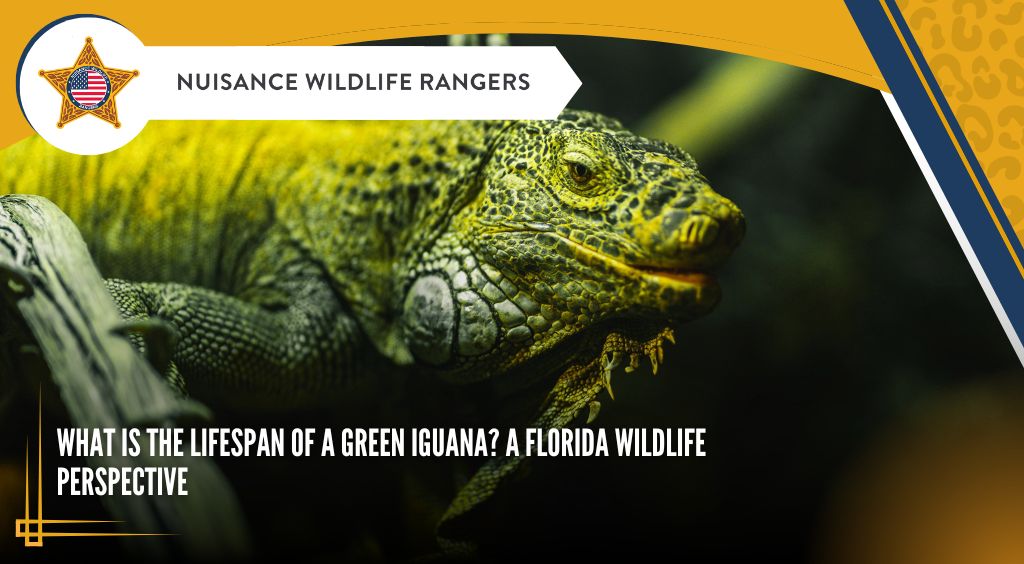
Green iguanas have become a growing concern in Florida, especially for homeowners dealing with property damage caused by these invasive reptiles. While they are popular in the pet trade and often admired for their bright green coloration and exotic appearance, most green iguanas live far beyond what many expect—especially under proper captive care.
If you live in Florida and are trying to better understand the green iguana, especially how long these lizards can live in the wild or in captivity, this article covers everything you need to know. From lifespan factors to environmental impact, we’ll break it down in a straightforward, no-nonsense way.
The average lifespan of a green iguana varies greatly depending on its environment. In the wild, most green iguanas live between 8 and 10 years. However, with proper care in captivity, their lifespan can extend up to 15 to 20 years. In rare cases, captive iguanas have even lived past 20 years, but this is uncommon.
Native to Central and South America, the common green iguana ranges from southern Mexico to southern Brazil, including the Caribbean islands. They thrive in tropical climates and are excellent swimmers, often seen near canals and ponds.
In Florida, however, these invasive iguanas have become a serious problem. Introduced through the pet trade, many owners released them into the wild once they became too large or unmanageable. The full-grown green iguana can reach 5 to 7 feet long, including the tail, making them one of the largest lizards in the Americas.
It is also important to note that iguanas may bite if they feel threatened. In other words, you shouldn’t try to remove iguanas from your property on your own. Instead, call a wildlife control company like Nuisance Wildlife Rangers.
Juvenile iguanas are usually a bright green color and appear harmless, but they grow quickly. As they become adult iguanas, their coloration darkens, and males develop pronounced jowls, strong jaws, and engage in territorial displays such as head bobbing and tail whipping. These behaviors have particular meanings, often used to protect females or deter rivals during breeding season.
In familial groups or territorial zones, iguanas may dig up nesting sites, displacing soil and damaging landscaping, sidewalks, and seawalls. They often compete with other animals for food and territory, and their populations can grow unchecked in the absence of natural predators.
Many people buy young iguanas from pet stores without understanding the specialized care they require. The idea of owning exotic animals may sound appealing, but many owners are unprepared for the long-term commitment.
If you’re a Florida resident dealing with abandoned or escaped iguanas, it’s important to understand that these animals are not just pests—they’re often victims of improper husbandry or impulsive pet purchases.
In Florida’s climate, green iguanas have found a second home. With few predators and plenty of vegetation, wild iguanas can live just as long as those in captivity—up to 10 years, sometimes longer if conditions are ideal.
However, cold snaps pose a serious threat. Green iguanas are cold-blooded and depend on external temperatures to stay active. When temperatures fall below 45°F (7°C), iguanas lose control of their own bodies and may fall from trees in a comatose state. Although many recover, extreme cold can be fatal.
Whether you’re a pet owner or someone trying to assess iguanas in your backyard, here are signs of a healthy green iguana:
Unhealthy iguanas often appear lethargic, show signs of malnourishment, or display abnormal posture due to weakened bones.
If you’re dealing with green iguanas on your property in Florida, knowing their average lifespan can help you understand how long a particular iguana might remain a problem. Keep in mind:
Whether you have one iguana swimming in your pool or a whole family of them roaming your backyard, Nuisance Wildlife Rangers is here to help you. We can humanely remove iguanas from your property and relocate them somewhere away from human activity.
The lifespan of a green iguana is a key factor in understanding the long-term impact these reptiles have on Florida’s ecosystem and on your property. These reptiles are not short-term visitors. With lifespans reaching two decades in ideal conditions, they can cause years of property damage if not properly managed.
While many people adopt them as pets, the commitment often exceeds expectations. Between their size, diet, habitat needs, and potential health issues, green iguanas are far more complex than they appear in pet stores.
For Florida residents, dealing with invasive iguanas is more than an inconvenience—it’s an ongoing challenge. If you suspect iguanas are nesting near your home or damaging your landscaping, consult with Nuisance Wildlife Rangers. The sooner you act, the better your chances of preventing an infestation that could last for years.
Green iguanas are not typically aggressive, but they can bite, scratch, or whip with their tails if threatened—especially during mating season. Their sharp teeth and strong jaws can cause injury, and they may transmit salmonella through feces. Pets, especially small dogs or cats, may provoke defensive behavior if they get too close.
Yes. Green iguanas compete with native species for food and habitat. They often consume ornamental plants and disrupt bird nesting sites, and their burrowing damages infrastructure, indirectly harming other animals by destabilizing the environment. Their rapid reproduction also increases pressure on Florida’s ecosystems.
You can deter green iguanas by removing their preferred food sources (like fruit trees and leafy plants), sealing off access to nesting sites, and using barriers or repellents. Prune vegetation away from walls and roofs, and consider motion-activated sprinklers. Persistent infestations usually require professional removal services.
In Florida, it is illegal to relocate green iguanas due to their invasive status. According to the Florida Fish and Wildlife Conservation Commission (FWC), they must be humanely euthanized if captured. Relocating them would risk further spread and ecological damage.
Green iguanas are among the largest lizards in Florida, reaching lengths of up to 7 feet. Unlike native lizards, they have a pronounced dewlap, long claws, and a row of spines along their back and tail. Their size, behavior, and damage patterns set them apart from species like anoles or skinks.
Female iguanas typically lay 20 to 70 eggs per year, depending on age and size. Once they reach maturity (usually around 2 to 3 years), they can reproduce annually, often returning to the same nesting sites. Without predators or human intervention, populations can grow exponentially in just a few seasons.
 Call Now
