
Welcome toNuisance Wildlife
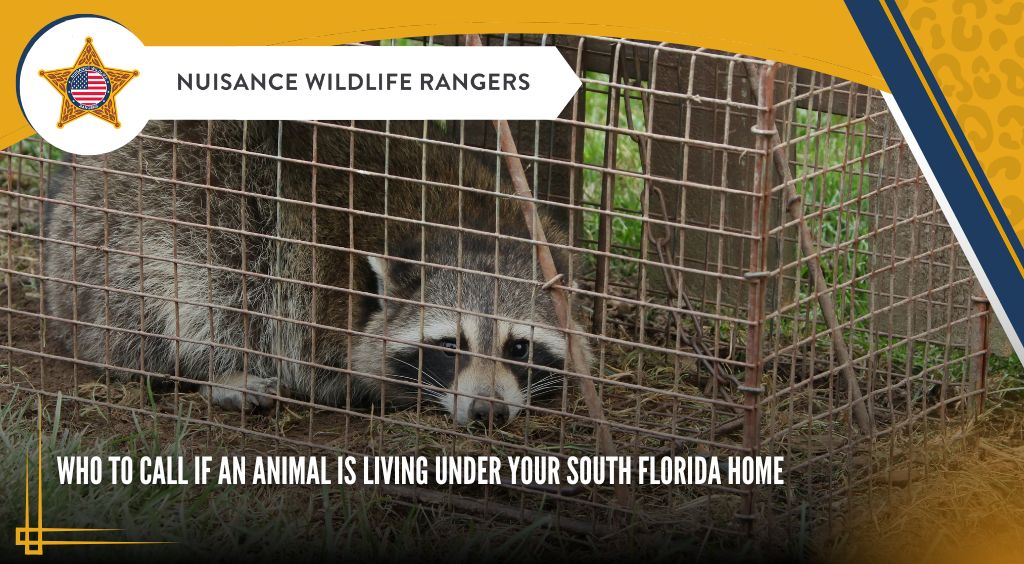
Hearing scratching, movement, or digging beneath your house can be unsettling. Many homeowners in South Florida eventually face this issue because the region’s warm climate, steady food sources, and abundant wildlife create the perfect environment for animals to seek shelter around residential properties. If you suspect an animal is living under your home, it is important to act quickly and safely. Understanding who to call if an animal is living under your home can help protect your property, your family, and the wildlife itself.
For homeowners across South Florida, the safest and most effective solution is contacting a professional wildlife removal company like Nuisance Wildlife Rangers. Their team specializes in removing nuisance wildlife humanely while preventing animals from returning.
Many wild animals are constantly searching for a safe shelter where they can rest, raise young, and stay protected from predators. The area beneath a house—especially a crawl space, porch, or foundation gap—often provides the perfect environment.
These areas are typically:
For wildlife, these conditions make the space under a home an ideal place to build a nest or burrow.
In South Florida, several species commonly move under homes, including:
Raccoons and opossums are among the most frequently reported nuisance animals in residential areas because they adapt easily to human environments and take advantage of accessible food sources.
Once an animal gains access beneath your house, it may stay for weeks or even months, especially during winter or breeding season when animals are raising young.
Many homeowners do not immediately realize an animal is living beneath their home. However, several warning signs can indicate the presence of nuisance wildlife.
A few common indicators include:
Many nuisance animals are nocturnal. If you hear scratching noises, movement, or thumping under your house during the night, it may indicate animals such as raccoons, rats, or opossums.
Animals often create a burrow by digging holes near the foundation or along the edge of a porch. These holes serve as entry points into the crawl space.
Droppings around your property, especially near openings or under structures, can signal that animals are nearby. Animal droppings can also present serious health concerns.
A persistent smell near the crawl space or foundation may come from urine, droppings, or food remains brought in by animals.
Wildlife can chew, claw, or push through weak areas of a structure. Broken vents, gaps in siding, or loose foundation panels often indicate an animal has gained access.
If you notice these signs, it is important to stay calm and avoid direct contact with the animal.
While some homeowners may initially think the animal will leave on its own, animals living beneath a house often create bigger issues over time.
Many species cause damage while creating shelter. Digging holes and burrows near the foundation can weaken structural areas of your home.
Animals may also chew wires, insulation, or wood beneath the house. In fact, rodents chewing on electrical wiring is one of the leading causes of residential fires in the United States.
This creates serious fire hazards if not addressed quickly.
Wild animals can carry diseases that pose risks to humans and pets.
Some of the most common diseases associated with wildlife include:
The Centers for Disease Control and Prevention (CDC) reports that rodents alone spread more than 35 diseases worldwide through droppings, urine, saliva, and parasites.[1]
Direct contact with animals or their droppings can increase the risk of illness.
When wildlife settles under a house, it often attracts other pests such as insects, fleas, ticks, and mites. Food scraps and nesting materials can create the perfect environment for additional infestations.
Some animals may become aggressive if they feel threatened, especially when protecting their young. Pets that investigate the crawl space or foundation area could encounter a dangerous animal.
Because of these risks, homeowners should not attempt to handle the situation alone.
The safest and most effective solution is contacting a professional wildlife removal service.
Companies like Nuisance Wildlife Rangers specialize in identifying nuisance animals, safely removing them, and preventing them from returning.
Professional wildlife removal experts can:
Attempting DIY trapping or using animal repellent products often fails to solve the underlying problem. In some cases, animals may become trapped inside walls or crawl spaces, leading to additional damage and odors.
A trained professional will understand animal behavior and apply the right solution for each situation.
When homeowners contact Nuisance Wildlife Rangers, the wildlife removal process typically follows several important steps.
The first step is a detailed inspection of the property.
A professional technician will examine the crawl space, porch areas, foundation gaps, and surrounding yard to determine:
This step is essential because different species require different removal methods.
Once the animal is identified, wildlife specialists use safe trapping techniques designed to remove the animal without causing harm.
Humane trapping methods protect both the animal and the homeowners.
In some cases, a one-way door may be installed. This device allows animals to leave the space but prevents them from returning.
If a mother animal has created a nest with young animals under the house, professionals carefully remove the young and relocate them with the mother.
Removing only the adult animal without addressing the nest can leave babies trapped inside, which leads to odors and health hazards.
Once the animals are removed, the next step is preventing future access.
Wildlife technicians seal entry points using durable materials such as:
These materials block animals from digging or squeezing through gaps.
Animal droppings and nesting materials can contaminate the crawl space.
Professional wildlife services remove droppings and treat the area to reduce bacteria, parasites, and odors. This step helps protect homeowners from health risks.
Some homeowners try to get rid of animals themselves using traps, poison, or repellents. However, DIY wildlife removal often causes more problems than it solves.
Common issues with DIY methods include:
In Florida, many wildlife species are protected by state regulations that control how animals can be removed or relocated.
Professional wildlife removal services understand these regulations and follow safe, legal procedures.
Once wildlife has been removed, homeowners should take steps to prevent animals from returning.
A few effective prevention methods include:
Wild animals are often attracted to easily available food.
Secure trash bins and avoid leaving pet food outside overnight.
Regularly check for gaps, cracks, or holes around the foundation and crawl space.
Small openings can become entry points for animals.
Damaged or uncovered vents allow animals to enter easily. Installing reinforced vent covers can help block access.
Bushes, tree branches, and overgrown plants can provide animals with access to the house.
Keeping vegetation trimmed reduces hiding spots for wildlife.
Using materials such as hardware cloth or wire mesh around vulnerable areas can prevent animals from digging under structures.
Taking these preventative measures can reduce the risk of future wildlife problems.
South Florida’s climate and environment make wildlife encounters common for homeowners. While animals naturally search for shelter and food, your home should not become their nesting place.
If you suspect an animal living beneath your house, the best response is to stay calm and contact professionals who specialize in wildlife removal.
Nuisance Wildlife Rangers provides safe, humane solutions designed to remove nuisance animals while protecting both homeowners and wildlife. Their experienced team can determine the species involved, remove animals safely, and secure your property against future access.
Ignoring the problem can lead to structural damage, health risks, and costly repairs. Acting quickly ensures your home remains safe, clean, and protected from unwanted wildlife.
If you hear movement beneath your house or discover signs of animal activity, contact Nuisance Wildlife Rangers for the professional assistance you need.
Identifying the species can be difficult without experience, but certain clues can help narrow it down. The size and shape of droppings, the location of the hole or burrow, and the type of noises you hear often reveal useful information. For example, heavy thumping sounds at night may point to raccoons, while light scratching in the walls or crawl space may suggest rats, mice, or a squirrel. Skunks may produce a noticeable odor, and opossums often leave scattered debris near entry points. A professional wildlife technician can examine tracks, droppings, and structural damage to accurately determine the species.
Sometimes animals leave temporarily to search for food, but that does not mean they have abandoned the shelter. Many nuisance animals choose a location under a house because it provides long-term protection from predators and weather. If the animal has built a nest or has young nearby, it is unlikely to leave voluntarily. In some cases, animals may return repeatedly to the same location if entry points remain open.
Yes. Wildlife activity around homes often increases during breeding seasons and cooler months. During winter, animals search for warm shelter, which makes crawl spaces and foundations more attractive. In spring, many species raise young and look for safe nesting areas. Homeowners may notice increased noise or movement during these periods as animals build nests or care for their young.
They can. Areas with active wildlife often attract predators searching for food. If rodents such as rats or mice are present under a home, snakes may follow the scent or activity. Similarly, insects attracted to droppings or food scraps can bring additional wildlife into the area. Removing the original wildlife problem helps eliminate the conditions that attract other animals.
Blocking the hole immediately is not always the best approach. If an animal is still inside, sealing the entry point could trap it beneath the home or inside the walls. This can lead to additional structural damage as the animal tries to escape, and in some cases, the animal may die inside the structure, creating odor and sanitation problems. Wildlife professionals first confirm whether animals are still present before sealing entry points.
Homeowners should avoid approaching the animal or attempting to scare it away. Keep pets and children away from the area where the activity is occurring. If possible, limit outdoor food sources such as pet food, open garbage containers, or fallen fruit that may attract wildlife. Observing the location of activity, noises, or visible holes can also help wildlife removal professionals assess the situation more quickly when they arrive.
References:
 Call Now
