
Welcome toNuisance Wildlife
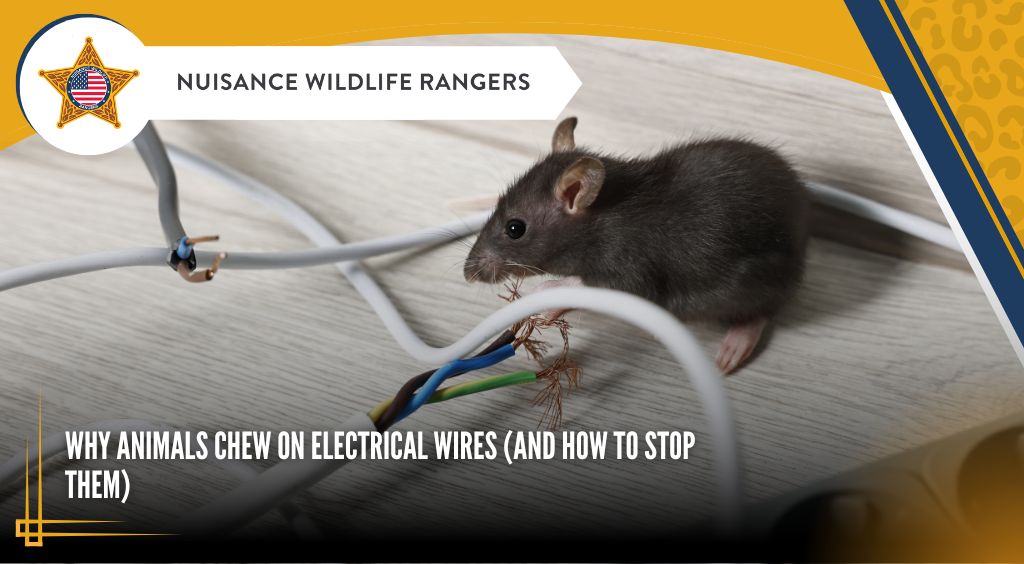
Wild animals chewing on electrical wires is more than just an annoyance—it’s a dangerous and costly issue. In Florida, where warm weather encourages year-round rodent activity, homeowners and car owners alike often face the consequences of critters chewing wires in attics, garages, and even under the hood of parked vehicles.
This article explores why animals chew on electrical wires, what types of damage they can cause, telltale signs of an infestation, and, most importantly, how to stop them safely and effectively.
The main reason animals chew on electrical wiring is that rodents—like mice, rats, and squirrels—must gnaw constantly to keep their teeth from overgrowing. Chewing on wire insulation, foam insulation, wood, and even car battery cables helps wear down their teeth.
This behavior is instinctive. If their teeth become too long, they can’t eat, and they may starve. Unfortunately, electrical wires and insulation offer just the right density for them to gnaw on.
Rodents often chew their way into homes, attics, or vehicles to build nests. They’re drawn to spray foam insulation, interior cavities, and roof structures where they find warmth and shelter. Once inside, they start gnawing to create a nest or access food.
In Florida, squirrels are known to chew through soffits and roof vents to nest in attics, while rats and mice often find their way through small entry points around doors, pipes, or cracks in masonry.
Some wire coatings, particularly those made with soy-based insulation, are known to attract rodents because they resemble food. This has been a major cause of car wiring damage in recent years, especially in newer vehicles parked for long periods.
Rodents will chew any wires they can get their paws on. The most likely places you’ll find chewed wires include:
Rodents might chew on your insulation, which can be a nuisance. However, when they start chewing on electrical wires, you have a big problem. Chewed wires aren’t just a nuisance—they’re dangerous. Here’s what can happen:
Frayed or exposed wires can cause sparks, short circuits, or electrical fires. Unfortunately, this can lead to deadly house fires.
Rodents chewing in the engine bay can damage car wires, battery cables, or coolant lines. In other words, rodents can cause you to take on hefty car repair bills.
From rewiring entire sections of a house to replacing spray foam insulation, the damage caused by gnawing rodents can require extensive repairs—sometimes including masonry repair, roof replacement, or drywall removal.
If you suspect animals may be chewing on your wires, watch for these telltale signs of rodent activity:
Noticing these signs means you have a rodent problem. Unfortunately, this means you’ll need help from a professional wildlife removal service. That said, Nuisance Wildlife Rangers is here to provide you with the assistance and removal services you need.
Prevention is key. Here are effective and humane strategies to stop animals from chewing your wires:
Inspect your home for obvious gaps, cracks, or holes where animals may gain access. Use steel mesh, caulk, or foam insulation designed to deter rodents. Don’t forget to check around pipes, vents, and roof eaves.
Squirrels and rats often jump from tree branches onto rooftops. Keep tree limbs trimmed at least 6-8 feet from the roofline to prevent easy access.
In cars and attics, consider applying rodent-repelling electrical tape, which is treated with a spicy chemical that discourages chewing.
Bright lights can scare away critters from driveways, garages, and crawl spaces, reducing activity near your home and car.
Rodents dislike strong smells. Peppermint oil, garlic sprays, or commercial rodent repellents can discourage chewing. Soak cotton balls and place them near exposed wires, in attics, or around the engine bay.
Secure trash cans, clean up pet food, and remove bird feeders near your home or garage. Food attracts rodents, and once they find it, they’ll likely stick around.
If you see exposed wires or suspect chewing wires, turn off power to the affected area to prevent fire or injury.
Avoid DIY electrical repairs. Contact an electrician to safely inspect and repair damaged wiring.
Florida is home to many types of wildlife, and removal often requires proper licensing. A professional wildlife removal service can assess your situation, trap critters humanely, and prevent future infestations.
Florida’s subtropical climate and urban-wildlife overlap make homes especially vulnerable to animal intrusions. The abundance of trees, standing water, and warm shelter options encourages rodent activity all year long. In coastal areas or older homes, masonry cracks and aging insulation only increase the risk.
If you want to prevent electrical wiring damage from rodents and other animals, you should:
Rodents and other wildlife chewing wires may seem like a minor issue—until your car won’t start, your power goes out, or worse, your home catches fire.
If you’re in Florida and notice any signs of rodents chewing on wires, take preventive measures right away. Whether it’s rats chewing behind walls, mice chewing in the attic, or squirrels chewing through roof vents, early action can save you from expensive repairs and serious safety risks.
For safe, professional help, contact Nuisance Wildlife Rangers. We can identify the problem, remove the critters, and help protect your property long-term.
Yes, animals like rats, squirrels, and mice can be electrocuted if they bite through a live wire. While it sometimes deters others from returning, it can also pose a fire hazard or cause sudden power outages. If you find a dead animal near exposed wires, it’s best to call both an electrician and a wildlife removal expert to handle the situation safely.
When a car is left unused, especially in shaded or wooded areas, it provides a quiet, undisturbed space for rodents to nest. The engine bay stays warm after use, making it ideal for shelter. If there’s leftover food nearby or insulation materials under the hood, it can attract rodents looking for both warmth and nesting materials.
Ultrasonic repellents may offer temporary relief but are generally unreliable for long-term control. Rodents can become accustomed to the noise, and these devices don’t address the root problem, such as entry points or food availability. For lasting results, physical barriers and professional exclusion techniques are more effective.
There are rodent-resistant wire wraps and tapes treated with capsaicin, the active component in chili peppers, which discourages gnawing. You can also use metal conduit or steel mesh covers around vulnerable wires. These materials are harder for rodents to penetrate and are ideal in high-risk areas like attics, garages, and car wiring zones.
Yes. Older homes with aging insulation, masonry cracks, or damaged soffits are more vulnerable to wildlife intrusion. Properties near wooded areas or with lots of vegetation tend to experience higher levels of rodent activity, especially if food sources, like pet food or bird feeders, are left outdoors.
In Florida’s climate, rodent behavior is typically year-round due to the warm weather. However, spikes in activity may occur in the fall and winter when outdoor food becomes scarce. Regular inspections and tracking signs like droppings, chewing, and movement sounds can help determine the pattern and severity of the infestation.
 Call Now
